
EPOXY DRIVEWAYS
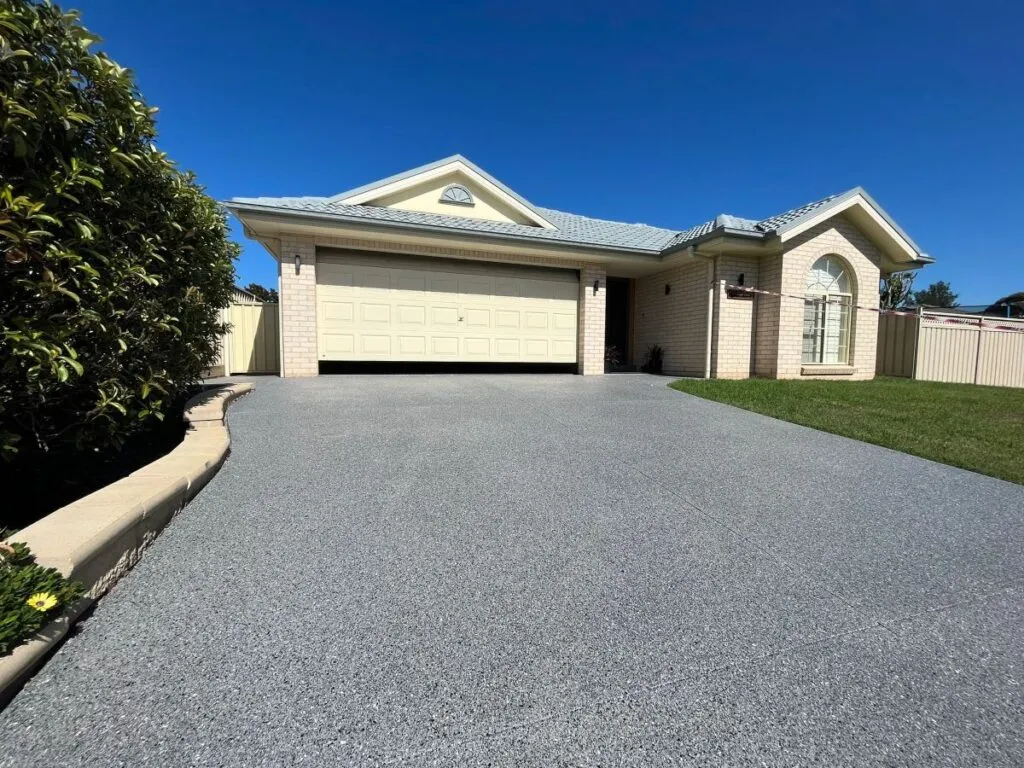
Epoxy driveways across Sydney. The slab is ground back properly first, then coated as a stencil pattern, a flake finish or a solid colour, and finished with a UV-stable top coat for the sun. Priced on site, because the pattern and the area decide it.
What is an epoxy driveway?
A coloured epoxy coating laid over the concrete you already have. It can go down through a stencil to give the look of pavers, tiles or stone across a plain slab, or as a flake broadcast, or as a solid colour. The slab underneath stays where it is.
What separates it from sealing is the preparation. An epoxy driveway is diamond ground back to clean, open concrete first, so the coating keys into the slab rather than sitting on whatever is already on it. That is more work and it costs more. It is also why an epoxy driveway does not need recoating on the same cycle as a sealed one.
The driveway services we do
- Free on-site quote, with a fixed written price before anything is booked.
- Diamond grinding back to clean, open concrete so the coating bonds to the slab.
- Cracks and gaps filled and made good before any coating goes down.
- Your choice of finish: a stencil pattern, a flake broadcast or a solid colour.
- UV-stable top coat built for full Sydney sun, so it does not chalk or yellow.
- 7-year written product warranty.
Sydney locals rate us 5 stars


Where an epoxy driveway works
The same system goes on more than the driveway, and most people bring the surrounding concrete into the same visit once they see the difference.
- Plain concrete driveways: a stencil pattern turns a flat grey slab into the look of pavers, tiles or stone without laying any.
- Patios and alfresco areas: the same finish, tied in to the driveway or run as its own colour.
- Paths and side access: usually quoted with the driveway, because they connect to it.
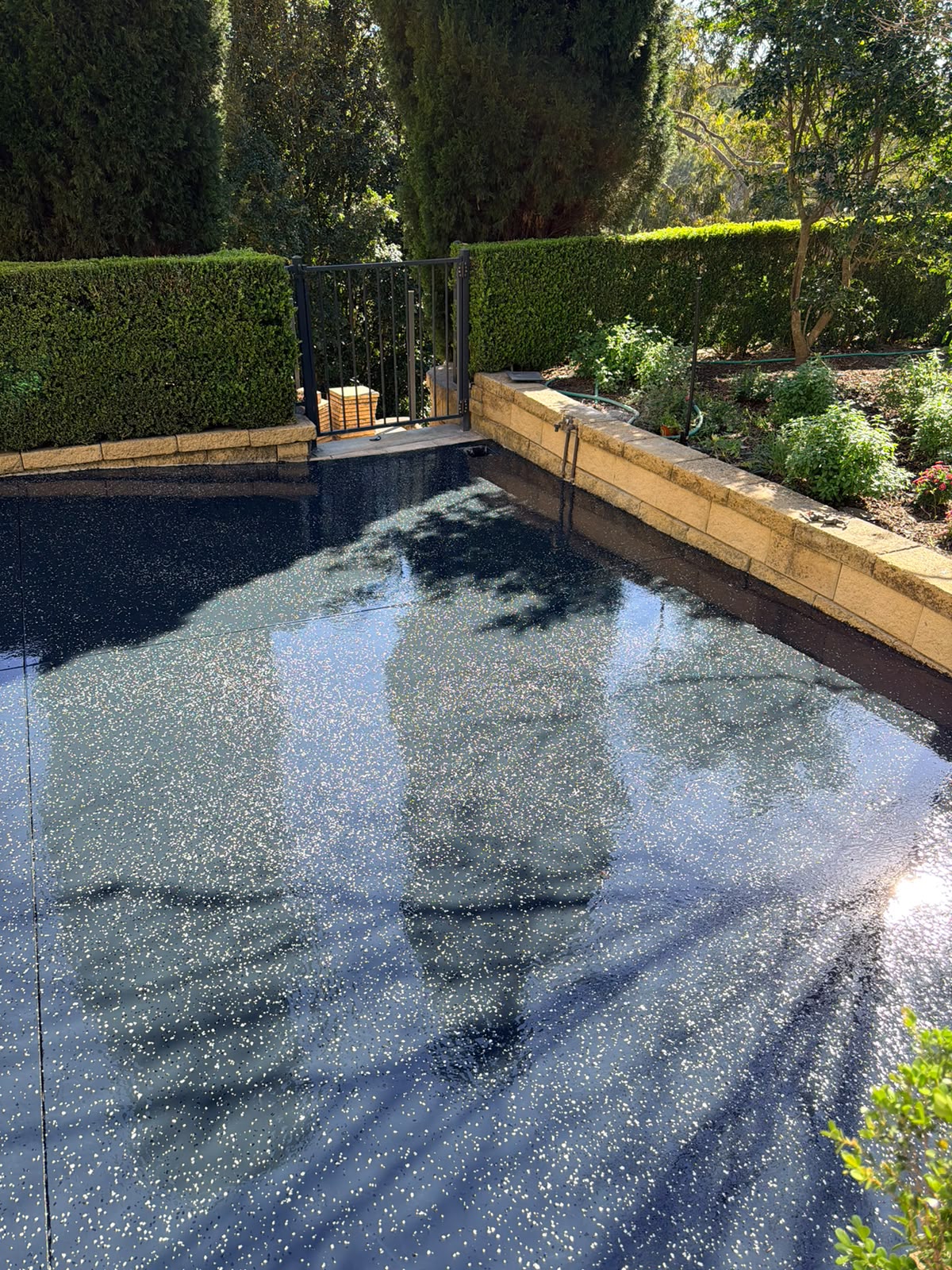
- Pool surrounds: a wet area, so the grip level is chosen for it rather than left to chance.
- Driveways coated years ago: an old coating that has started failing can be ground back and recoated rather than replaced.
If the slab underneath has failed, no coating fixes that, and we will say so before you spend anything.
How an epoxy driveway goes down
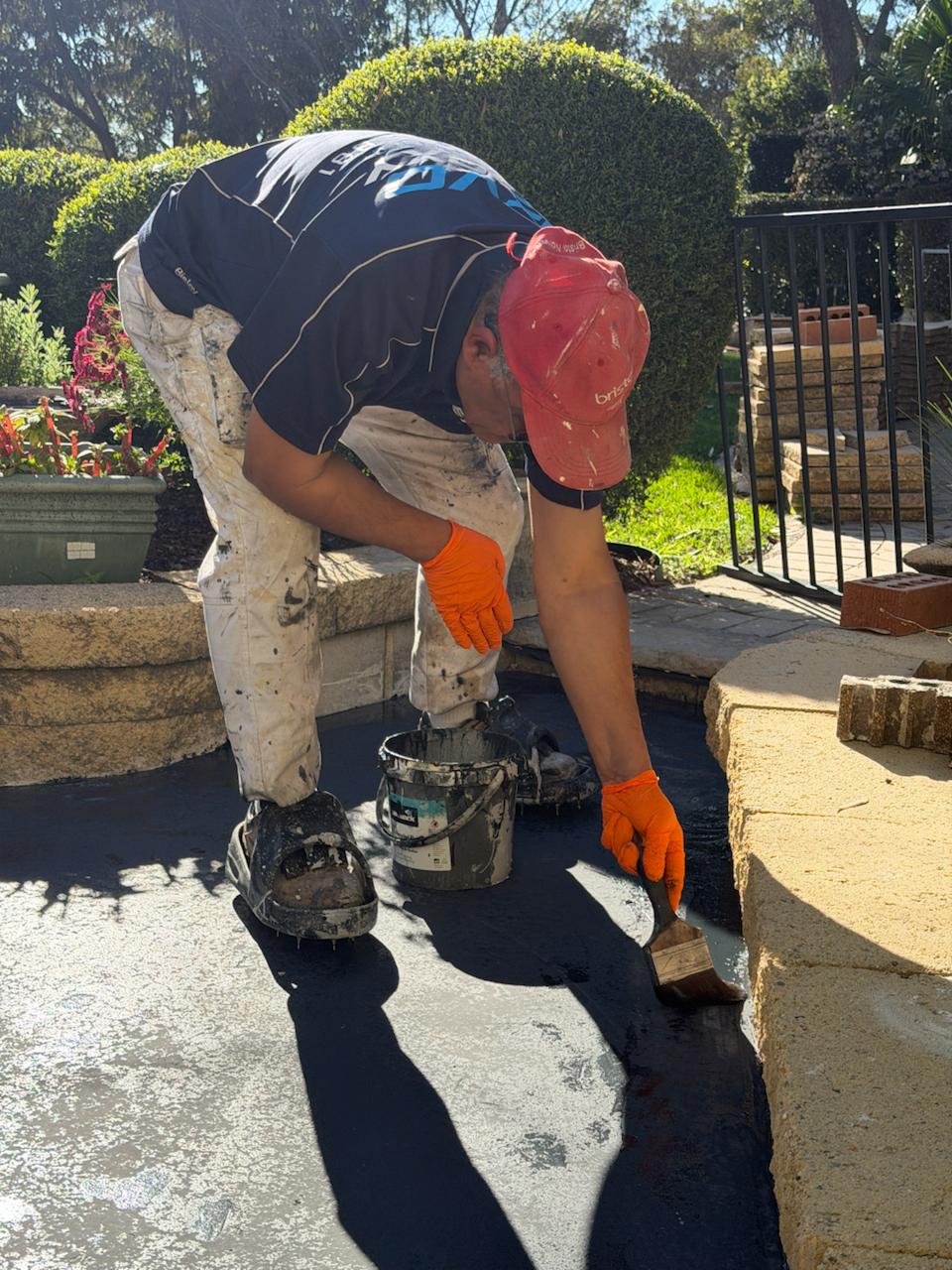
Preparation is most of the work on an epoxy driveway, and it is the part that decides how long the floor lasts.
The order is the same every time, and the quote sets out how many days we need on site.
- Diamond grinding: the slab is taken back to clean, open concrete so the primer can key in. This is the step sealing does not have.
- Cracks and gaps filled: cut out, filled and sanded flush before anything is coated.
- Primer and base coat: the foundation the finish sits on.
- Your finish: a stencil pattern, a flake broadcast or a solid colour.
- UV-stable top coat: the coat that takes the sun, the tyres and the weather.
An epoxy driveway is priced on site rather than off a list, because the pattern, the area and the state of the slab all move it. You get a fixed written price after the visit, and nothing is booked before you have it.
Stencil, flake or solid colour
Three finishes, all laid over the same prepared slab. Which one suits comes down to the look you are after and how much pattern you want.
Stencil pattern
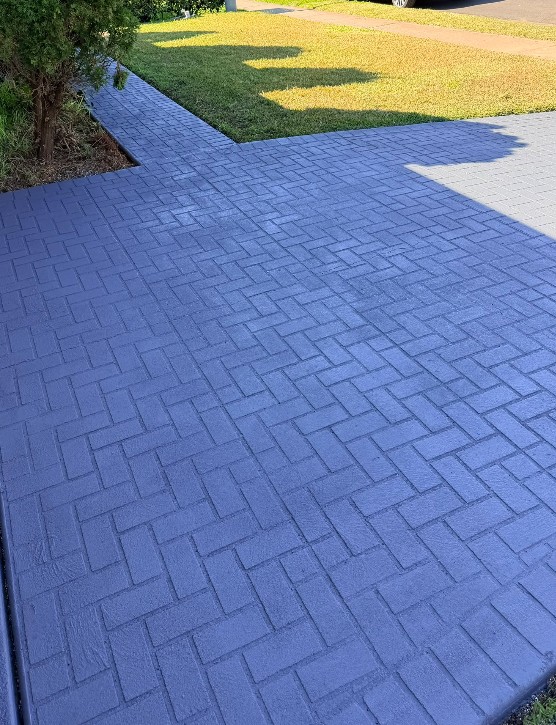
The coating is laid through a stencil so the finished driveway reads as pavers, tiles or cut stone, across concrete that is still a single slab underneath. No joints to weed, nothing to lift or settle. This is the finish most people picture when they say they want their plain driveway to look like something.
Flake finish
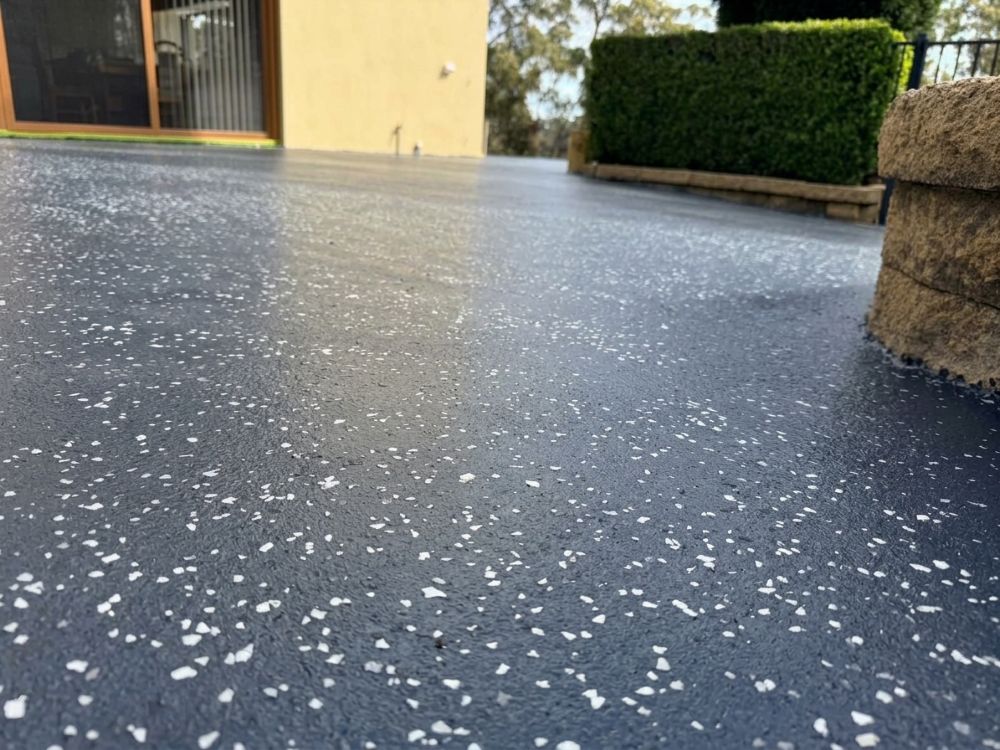
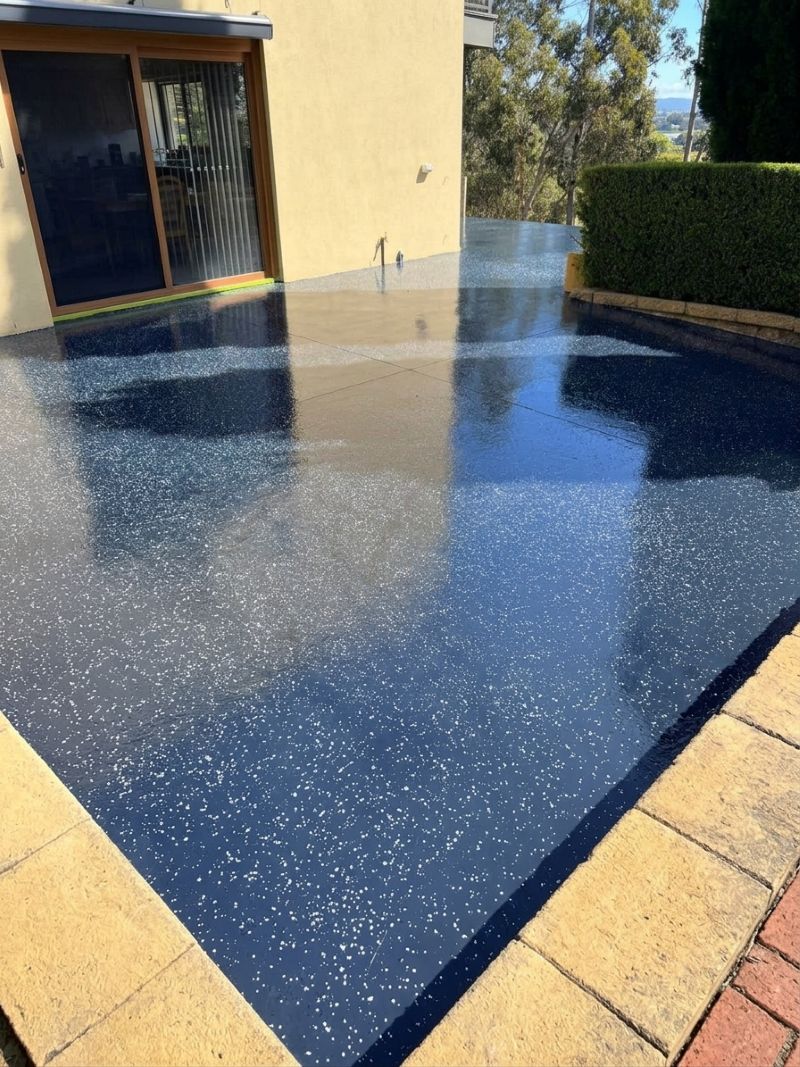
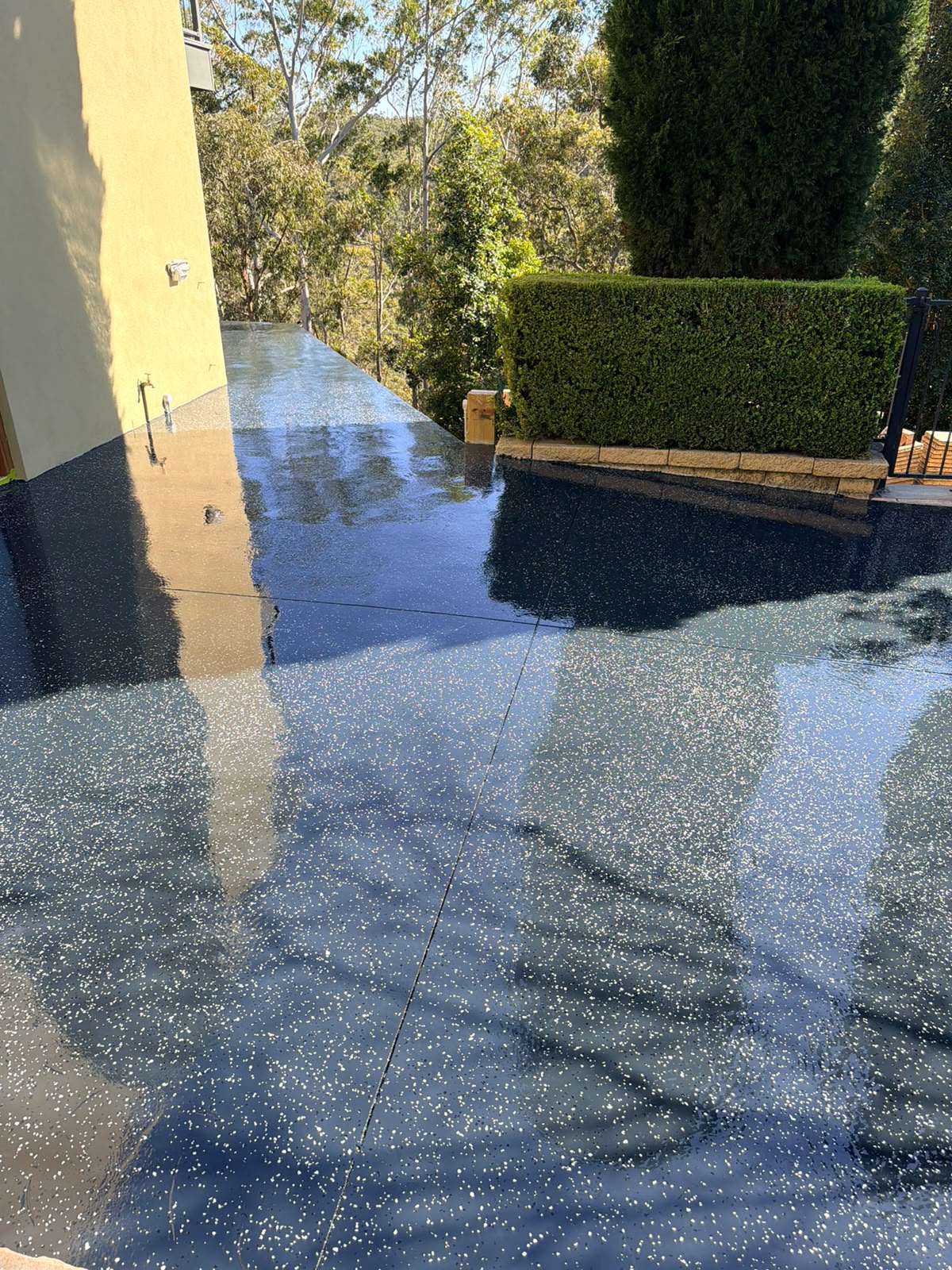
Coloured vinyl flake is broadcast across the wet coating and sealed under the top coat. The speckle hides dust and small marks far better than a flat colour, and the texture gives a bit of grip underfoot. Blends can be mixed to pick up the colours already in the house.
Solid colour
One clean colour across the whole driveway. It is the simplest of the three and it suits a house where the driveway should sit quietly rather than be the feature. All 76 colours are on the epoxy flooring colours page.
Our preferred coatings are made by All Purpose Coatings, an Australian manufacturer. APC lists its Essential flake finish for driveways and outdoor spaces, with a semi-textured feel that gives grip underfoot.
We bring samples out and look at them on your driveway, under your light, before you decide. A colour that looks right on a small chip can read quite differently across a whole driveway.
Two things to know before you choose
- Exterior work needs a UV-stable top coat, because a product formulated for a garage will chalk and yellow in full Sydney sun.
- Grip is chosen, not left to chance. An anti-slip additive in the top coat starts from $100. A quartz additive that takes the surface to a P4 slip rating starts from $250, for areas that need slip certification.
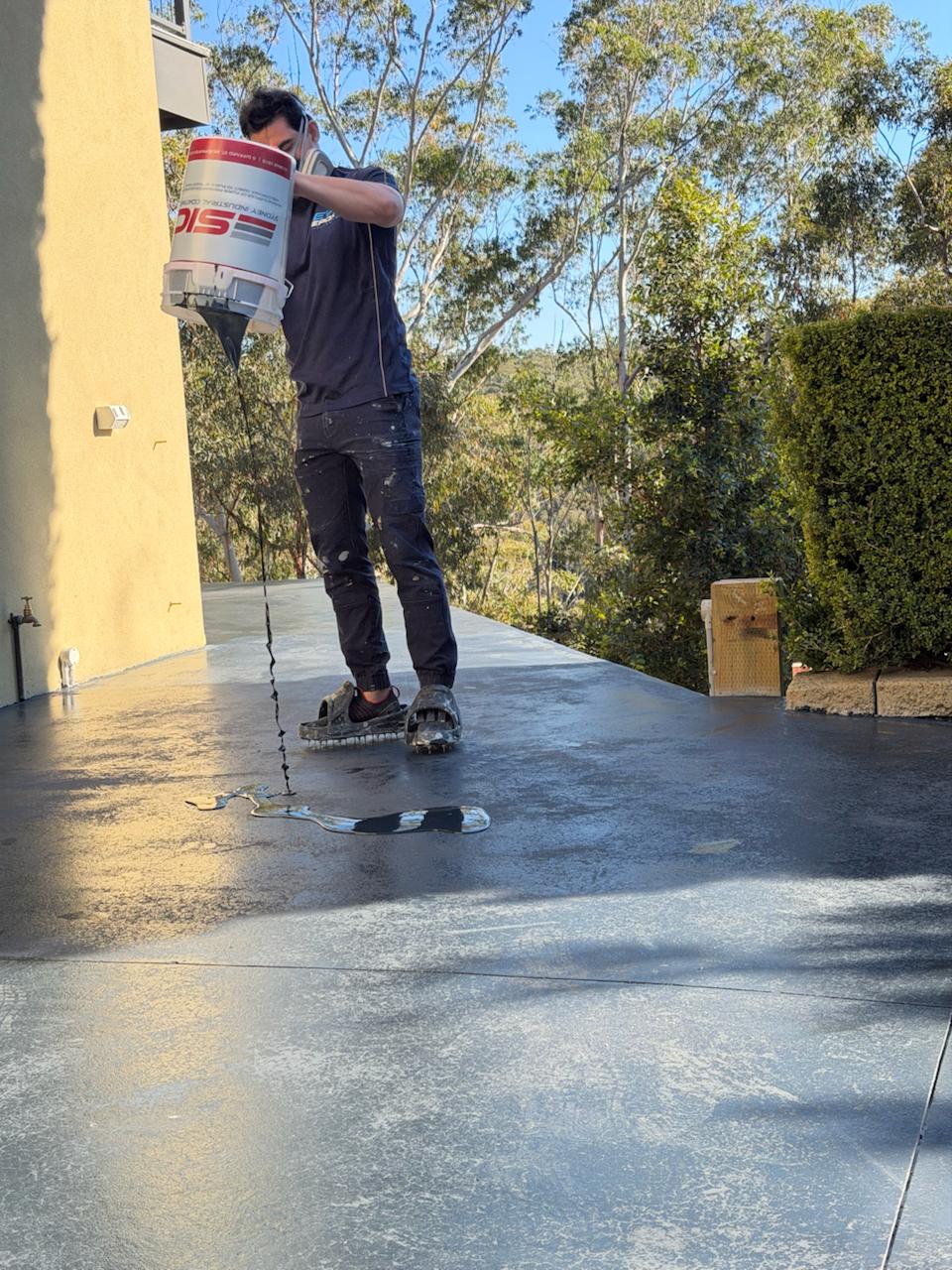
Before and after
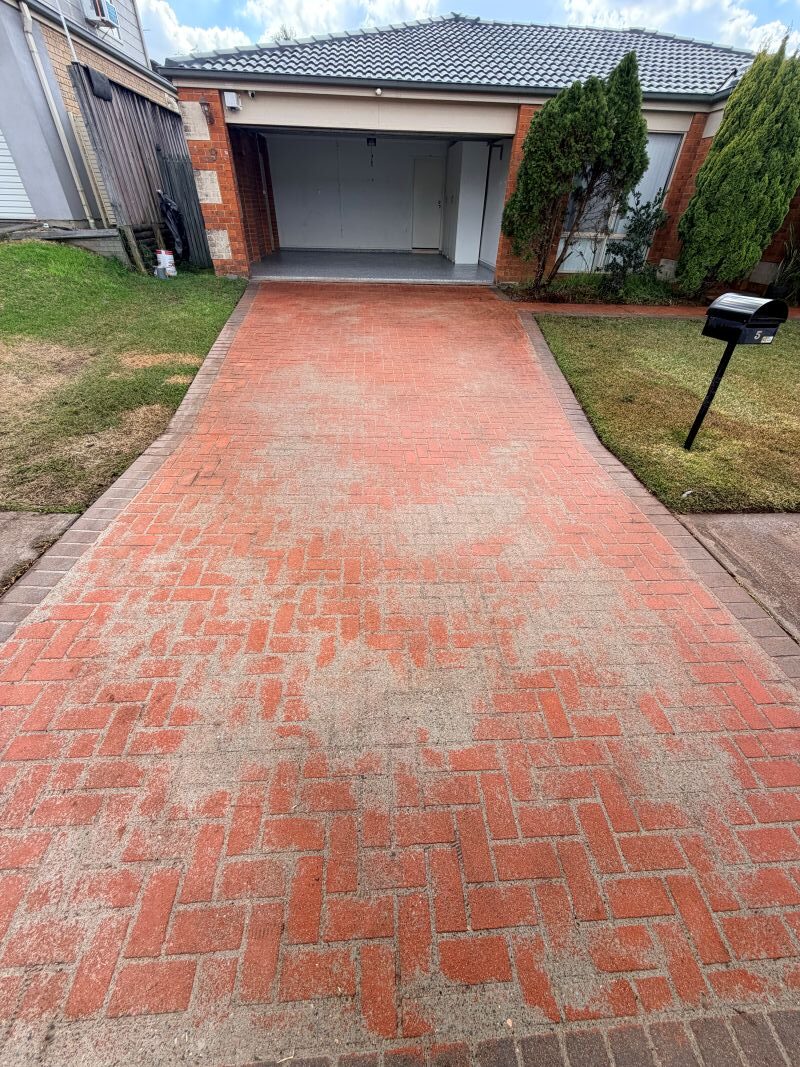
Two driveways we have sealed, both pressure cleaned, acid washed and coated. Drag the handle across each one to see the change.
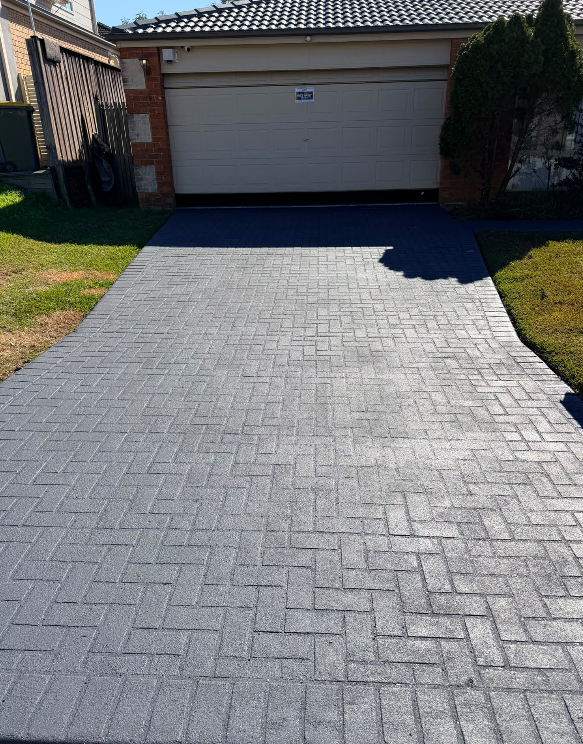
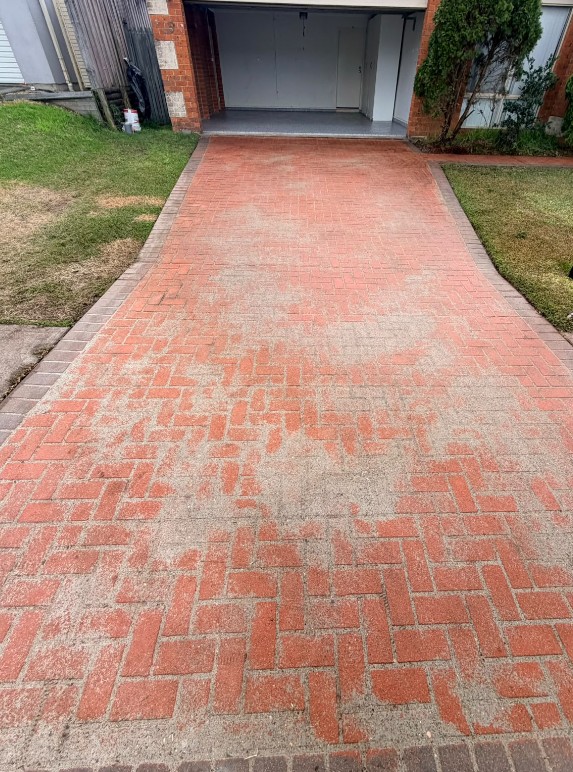
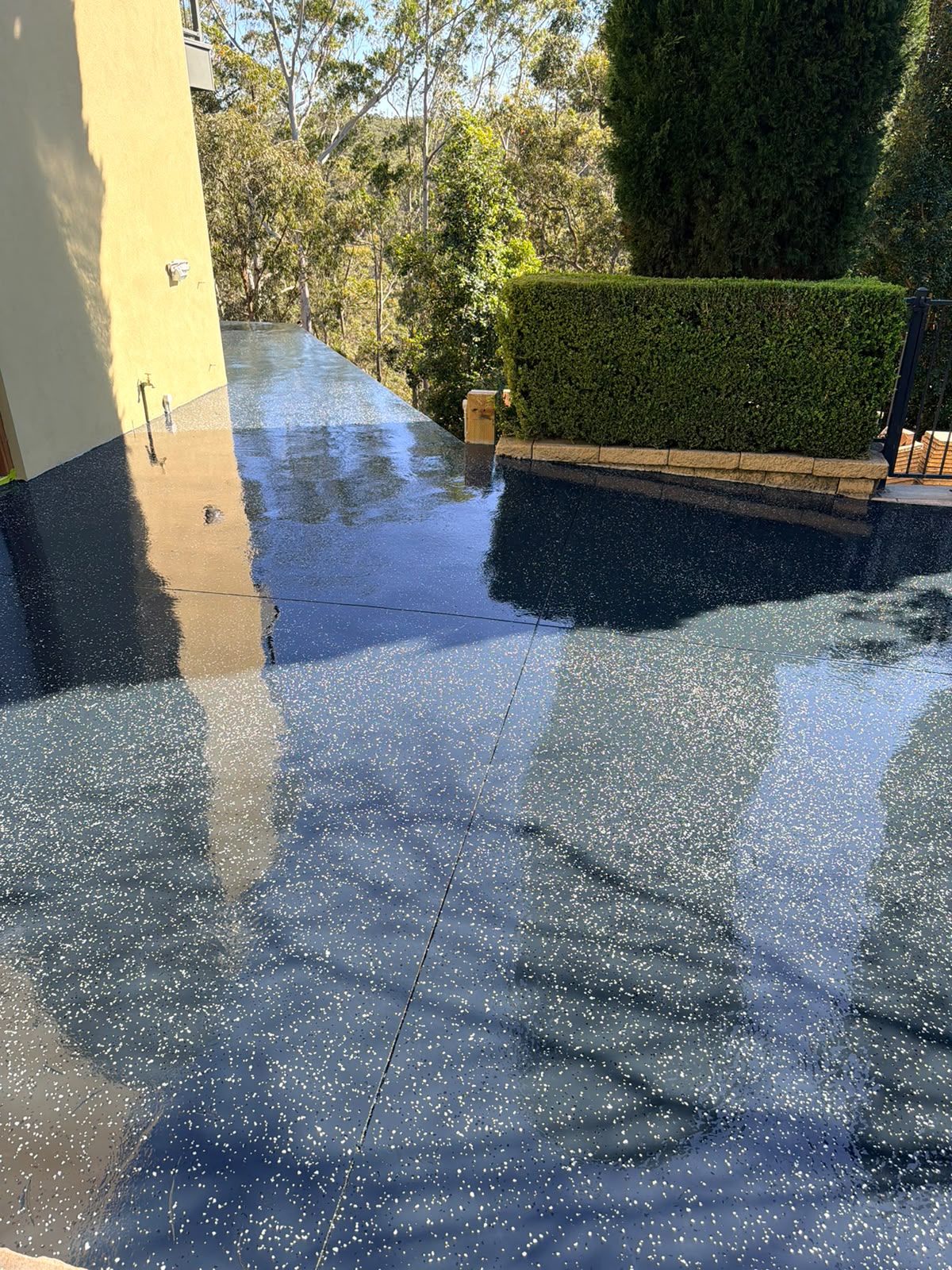
This driveway was pressure cleaned, acid washed, then coated with a non-slip additive worked into the top coat.
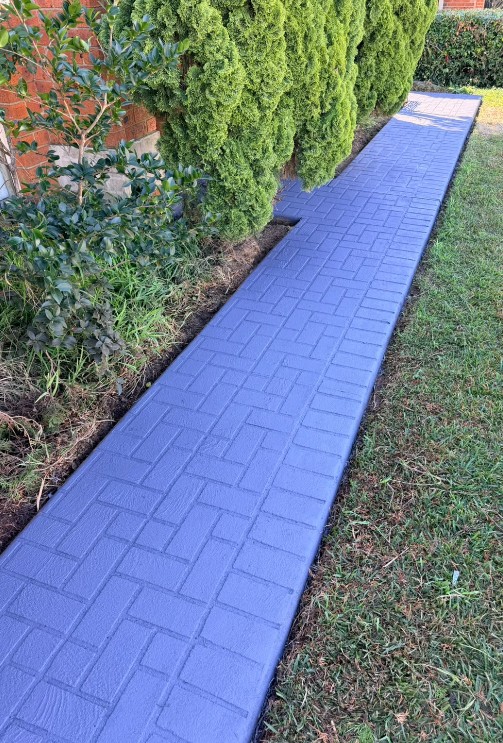
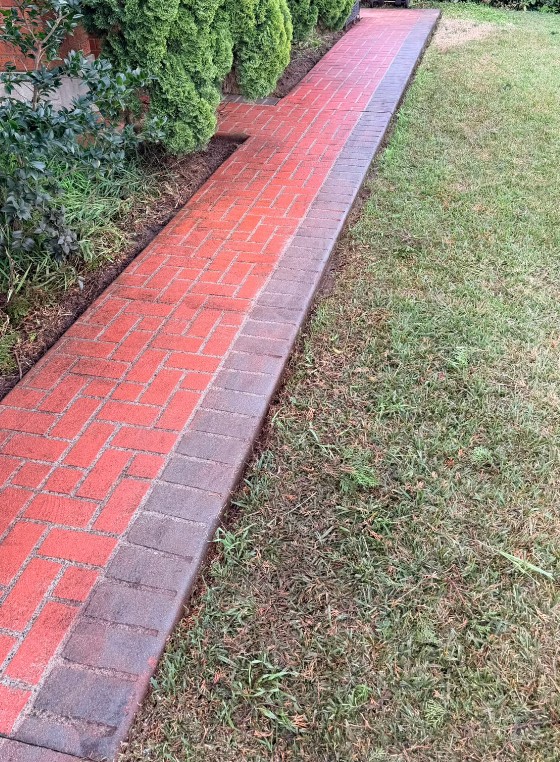
The front path at the same house, sealed on the same visit.
Epoxy driveway or sealing?
The honest answer depends on what you want from it. Sealing is the cheaper way in and it goes straight over the driveway with no grinding, but it lasts a couple of years and then needs maintaining. An epoxy driveway costs more because the slab is ground back first, and it does not need recoating on that cycle.
- You want a pattern or a real colour change, not just the concrete looking better.
- You would rather not maintain it every couple of years.
- The driveway has an old coating that is failing and needs taking back before anything new goes on.
- You are doing the patio or pool surround at the same time and want them to match.
If you want the driveway to look like pavers or stone, epoxy is the only one of the two that does it. If the concrete is sound and you mostly want it protected and looking fresh, sealing may be all you need.
We will tell you which we think fits when we see it, and either way the slab has to be sound underneath. If it is not, we will say so rather than coat over a problem.
Exposed aggregate driveways, and when to replace instead
Exposed aggregate driveways are common through Kellyville Ridge, Beaumont Hills, Stanhope Gardens, The Ponds and Box Hill, because most estate builds used it. When the sealer breaks down in the sun the driveway goes grey and dry, even though the stone underneath is still good.
An exposed aggregate driveway is prepared differently from plain concrete. We grind the driveway to expose the aggregate, then go over it again with a finer grade so the stone is polished rather than worn down, and then we reseal it to bring the colour and depth back. Done properly, the driveway looks close to the day it was poured. We do a test patch first, so you see the result before the whole driveway is done.
Rejuvenate when
- The slab is a single sound piece that does not move.
- Cracks are hairline or narrow, with no step between the two sides.
- The damage is a surface layer that has weathered, stained or flaked.
- The fall still sends water where it should go.
Replace when
- Sections rock or have dropped against each other.
- Cracks are wide with the sides at different heights.
- The concrete has broken into pieces.
- Large areas have spalled deep enough to show the steel.
- The sub base has washed out and the slab is bridging a void.
If your driveway is in the second group we will say so, because sealing a failing slab means doing the whole thing again later.
From booking to finished driveway
01
QuoteWe come out, look at the driveway, check what is surface and what is structural, and talk through colour and finish. The quote follows the visit, not photos, and covers the preparation, the product, the colour and the days on site.
02
Grinding and preparationThe driveway is diamond ground back to clean, open concrete, and the cracks and gaps are filled. This is the step that decides how long the finish lasts.
03
Coating and handoverPrimer, base coat, then your stencil pattern, flake or solid colour, and the UV-stable top coat over it. You can walk on it well before it takes a car, and we give you the dates for your driveway.
How long it takes comes down to the size of the driveway and the state of the surface. Evo Epoxy’s working figure is 72 hours before a sealed driveway goes back into normal use, and you can walk on it well before that. Weather, temperature, the condition of the slab and the product going down all move it, so we confirm the actual dates when the work is booked in.
Get a Free Quote
Tell us roughly how big the driveway is and whether you are after a stencil pattern, flake or a solid colour, and we will come and look at it.
0468 333 881sales@evoepoxy.com.auFree on-site quote, fixed written price
Diamond grinding back to clean concrete
Stencil, flake or solid colour finishes
UV-stable sealer built for full Sydney sun
7-year written product warranty
Suited to
Plain concrete drivewaysPatios & alfresco areasPaths & pool surroundsPreviously coated driveways
We work out of Kellyville and cover Castle Hill, Kellyville Ridge, Bella Vista, Norwest, Baulkham Hills, Rouse Hill, Beaumont Hills, Glenhaven, Dural, Kenthurst, Box Hill, Stanhope Gardens, Glenwood, Parklea, The Ponds, Schofields, Winston Hills, Seven Hills, Northmead and Marsden Park.
We reply to every enquiry within one business day
Frequently asked questions
Can you put epoxy on a driveway?
Yes. Evo Epoxy lays epoxy driveways as a stencil finish that gives the look of pavers, tiles or stone, as a flake finish, or as a solid colour. The same finishes go on patios, paths and pool surrounds, and a driveway that was coated years ago can be ground back and recoated rather than replaced.
How much does an epoxy driveway cost?
It is quoted on site rather than off a list, because the pattern, the area and the condition of the slab all move it. You get a fixed written price after a free on-site look, and nothing is booked before you have it. For comparison, straight concrete driveway sealing starts from $1,500.
Epoxy driveway or driveway sealing, which should I get?
Sealing is the cheaper way in. It goes straight over the driveway with no grinding, and it lasts a couple of years before it needs maintaining. An epoxy driveway costs more because the slab is diamond ground back first, and it does not need recoating on that cycle. If you want a pattern or a real colour change, epoxy is the only one of the two that does it.
Will an epoxy driveway fade in the sun?
Not with the right top coat. Exterior work is finished with a UV-stable top coat, because a product formulated for a garage floor will chalk and yellow in full Sydney sun. That top coat is part of the system, not an upgrade.
Is an epoxy driveway slippery when wet?
Grip is chosen rather than left to chance. An anti-slip additive worked into the top coat starts from $100. A quartz additive that takes the surface to a P4 slip rating starts from $250, for areas that need slip certification. A flake finish also carries some texture of its own. Tell us at the quote if the driveway is steep or the pool surround needs certifying.
Can you do the patio and pool surround at the same time?
Yes, and most people do once they see the driveway. Paths, patios and pool surrounds take the same system and are quoted alongside the driveway, which usually works out better than bringing us back for them separately.
How long before I can park on it?
Evo Epoxy’s working figure is 72 hours before a driveway goes back into normal use, and you can walk on it well before that. The coating needs to reach proper hardness before tyres go on it, particularly where a car turns on the spot. Weather, temperature and the condition of the slab all move it, so we confirm the actual dates when the work is booked.
Evo Epoxy Flooring2 Affleck Cct, Kellyville NSW 2155Servicing the Hills District & North West Sydney0468 333 881Get directions
Want to see what your driveway could look like?
Free on-site assessment and a fixed written quote, with samples brought out to your driveway before you decide.