
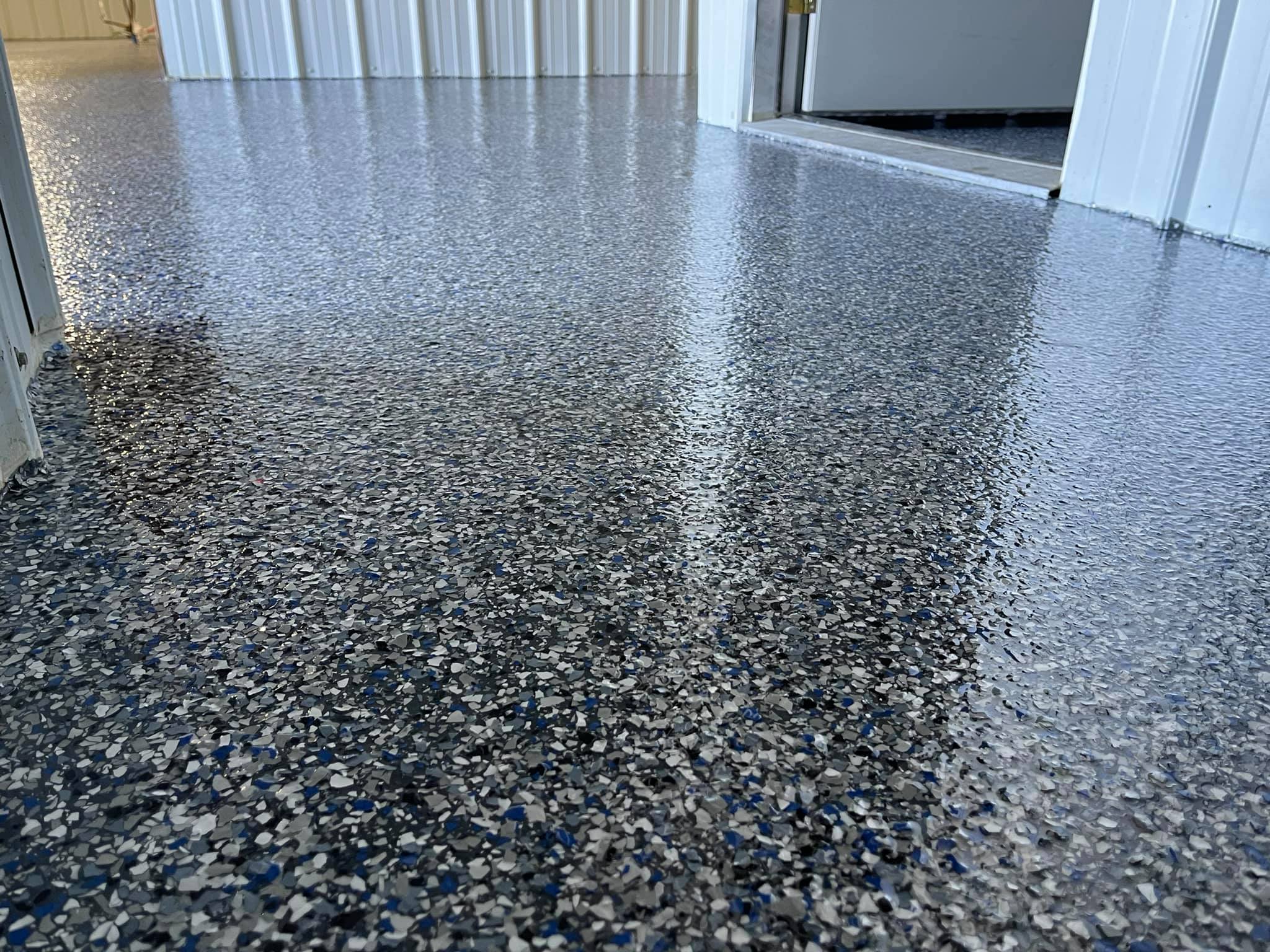
Epoxy Garage Floors Sydney: an Epoxy Coating Over Your Existing Concrete
Epoxy garage floor coating across the Hills District and North West Sydney.
We prep the slab and then lay a system that suits how the garage is to be used.
Can epoxy go on any garage floor?
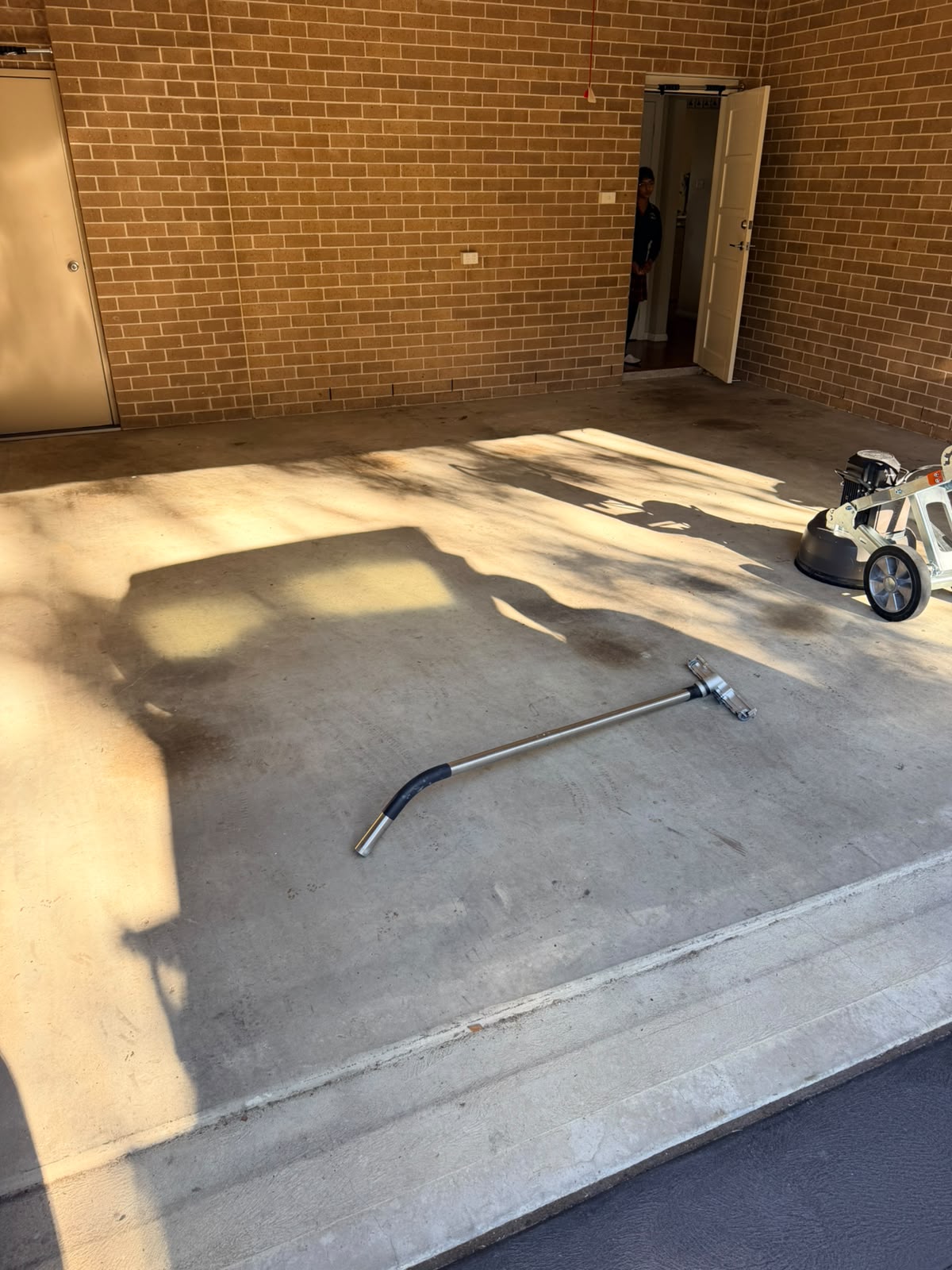
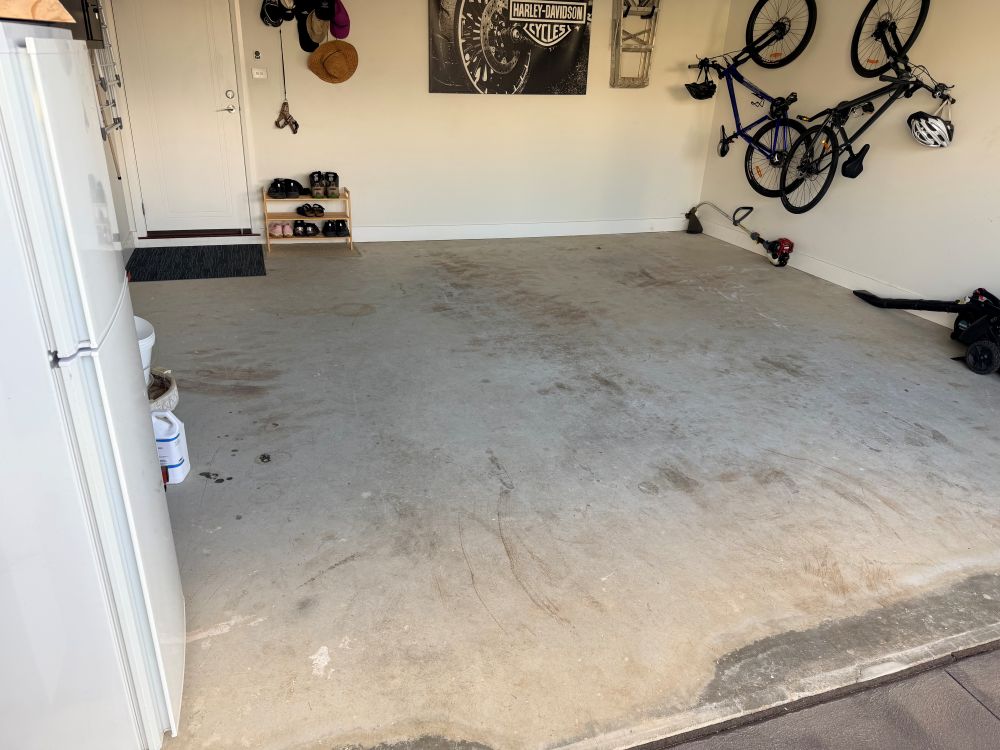
Nearly always, but the slab has the final say. Moisture is tested first, because damp coming up through concrete will lift a coating, and any cracks or chipped out holes are filled before we start. Most garages in the Hills were finished the day the house was built and never touched again, so the concrete has picked up oil drips, tyre marks and a fine grey dust that gets into everything.
- The floor is sealed, so spills wipe up instead of soaking into the slab and the fine grey dust stops.
- The garage is brighter, because a light floor throws what light you have back around the room.
- The garage feels finished, which is why most people end up using it for a lot more than parking the car.
Sydney locals rate our epoxy garage floors 5 stars on Google


What an epoxy garage floor actually is
Epoxy is a two part coating. A resin and a hardener are mixed together and a chemical reaction sets them into a hard, bonded film across the concrete. It is not paint sitting on top of the slab, and it is not a sealer soaking into it. Done properly, the coating grips into the ground surface of the concrete and becomes part of the floor.
- Primer soaks into the prepared concrete and grips it, so the coating becomes part of the floor
- The body coat carries the colour or the flake, and it is the layer you actually see underfoot
- A clear top coat takes the wear from your tyres and your shoes, and can be replaced later on
The top coat is the layer that meets your tyres and your shoes, and it is the one replaced years down the track if the floor ever needs freshening up. That is a much smaller job than starting again.
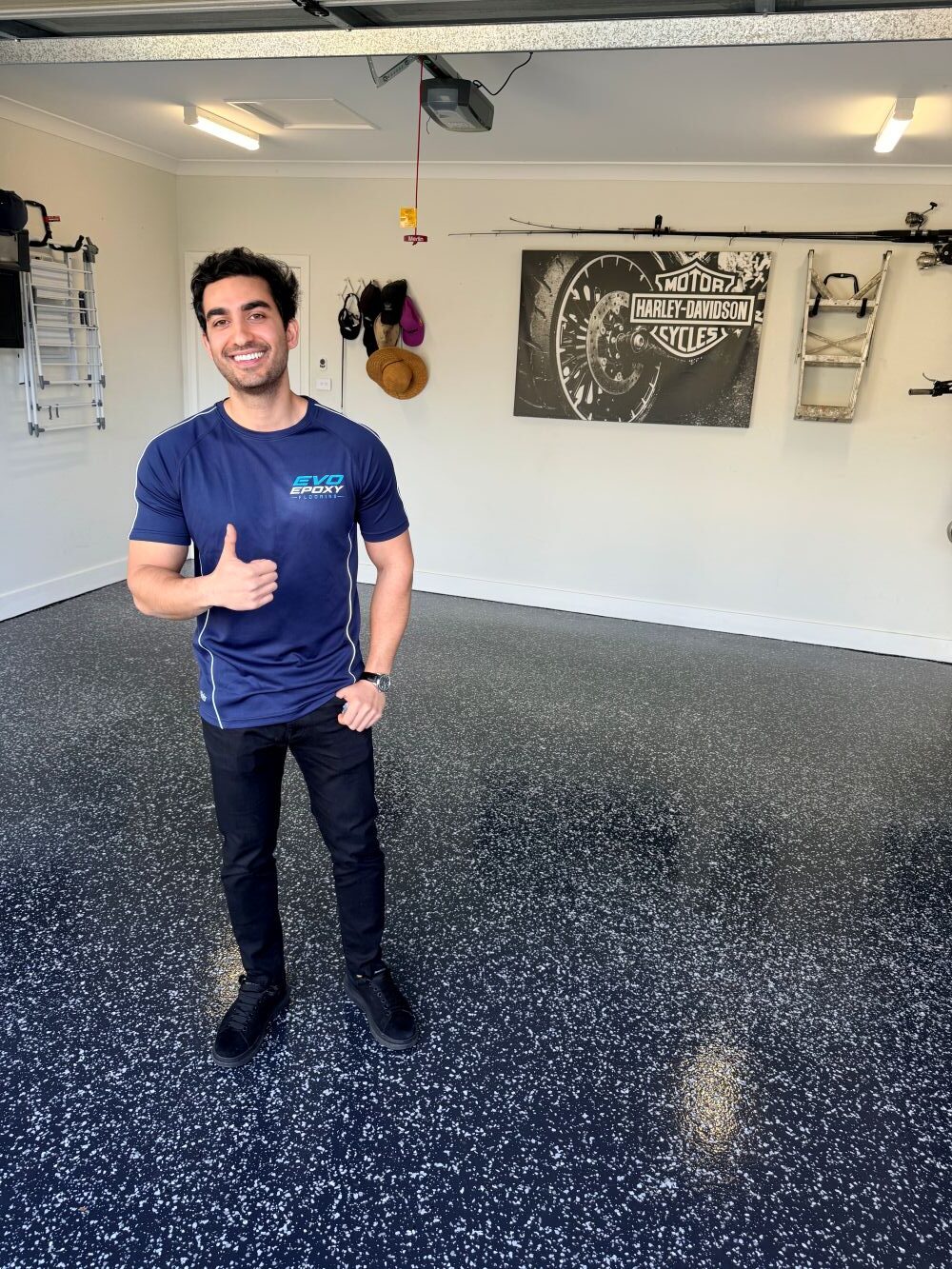
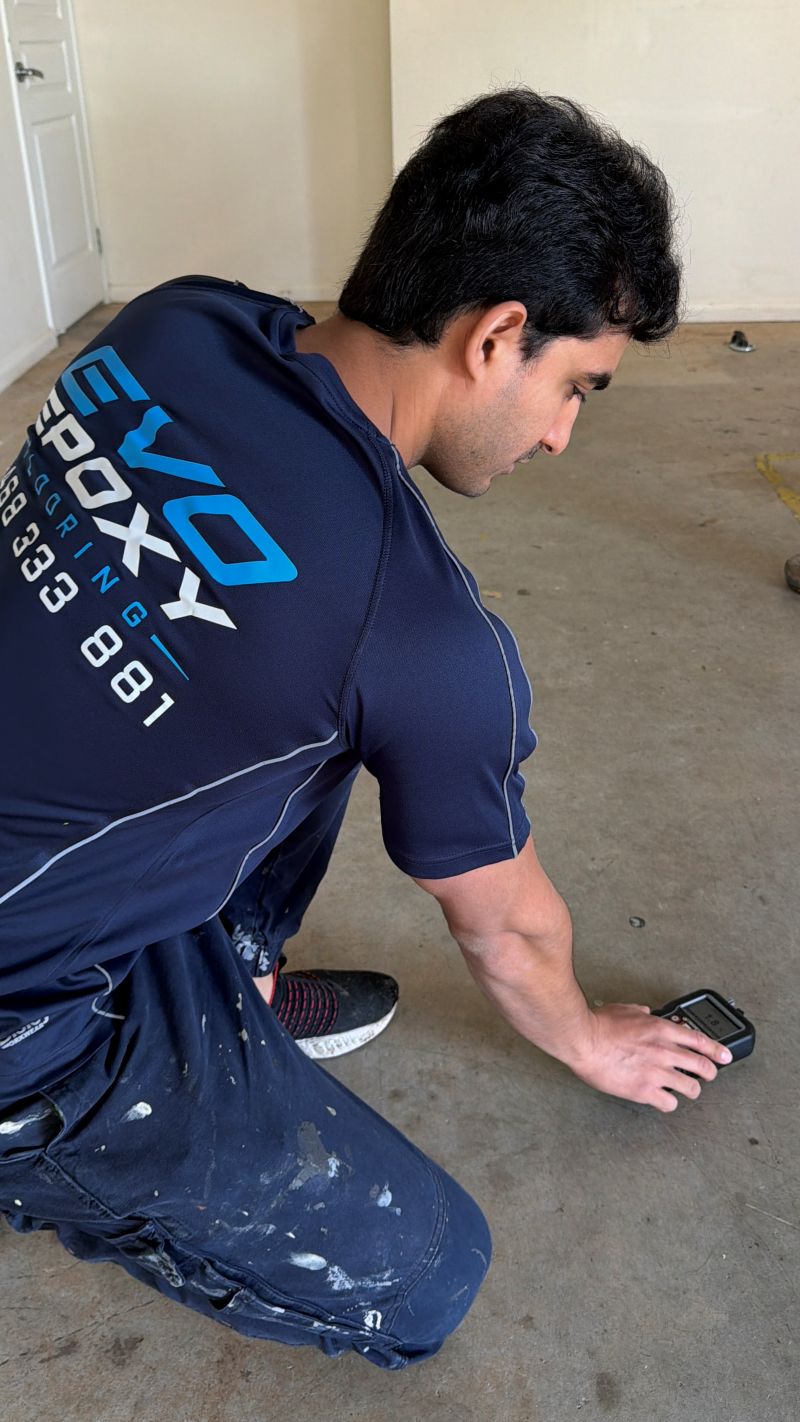
How we prepare a concrete garage floor before epoxy coating
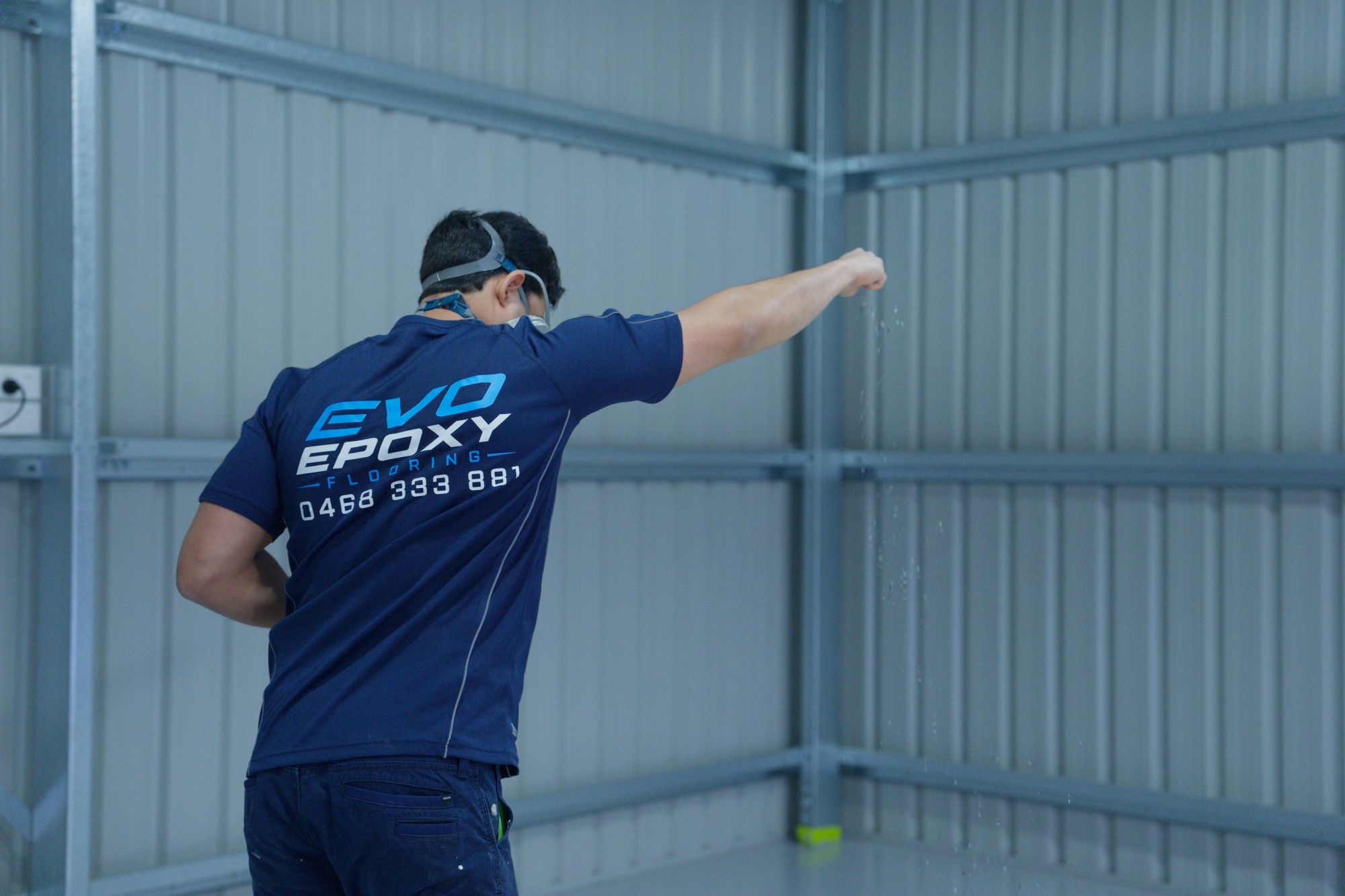
We prepare the slab by grinding it back with diamond grinders, with dust extraction running the whole time. That takes off the old coating, the glue, the sealer and the weak top layer of the concrete, and leaves clean, open concrete for the primer to grip.
- Diamond grinding takes the slab back to clean, open concrete so the primer can key in
- Cracks and chips are cut out, filled and sanded flush before any coating goes near them
- Oil spots are ground out and treated separately, because degreasing only lifts the surface
- Moisture is tested first, since damp rising through concrete will lift a sealed coating
Epoxy cannot be poured until the concrete is smooth, dry and dust free.
If the floor has old paint on it, that takes another round of grinding to get off, and we allow for it in the quote.
Epoxy garage floors before and after
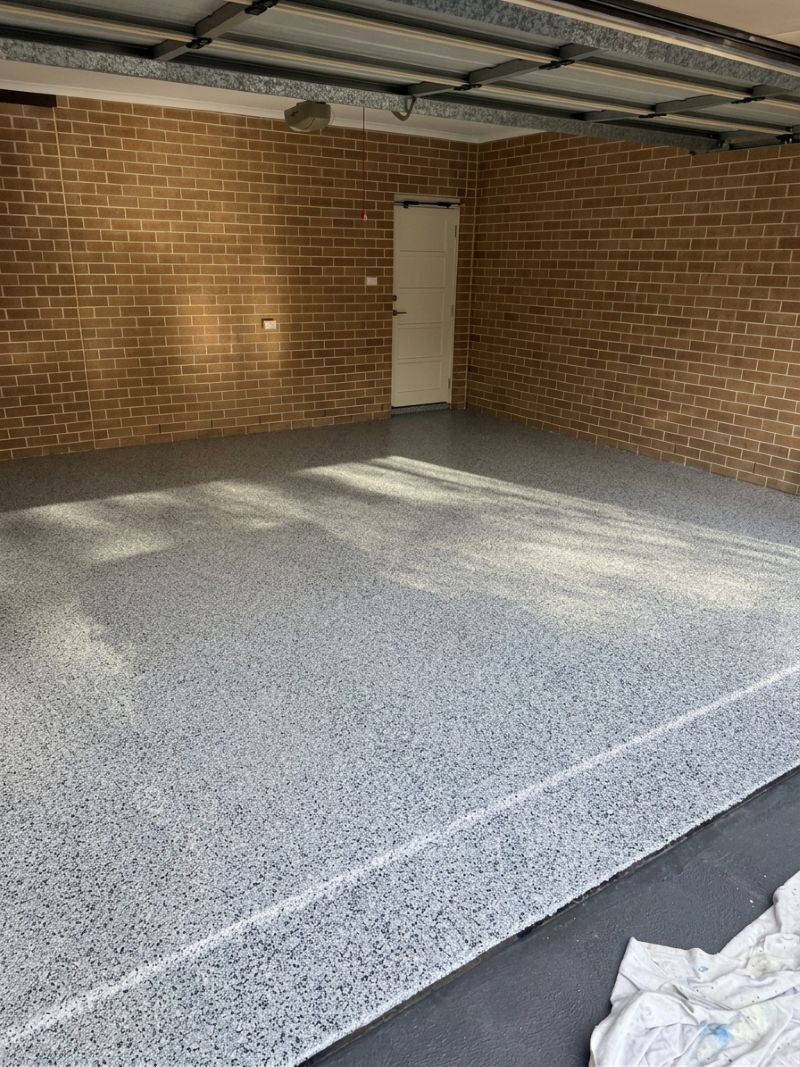
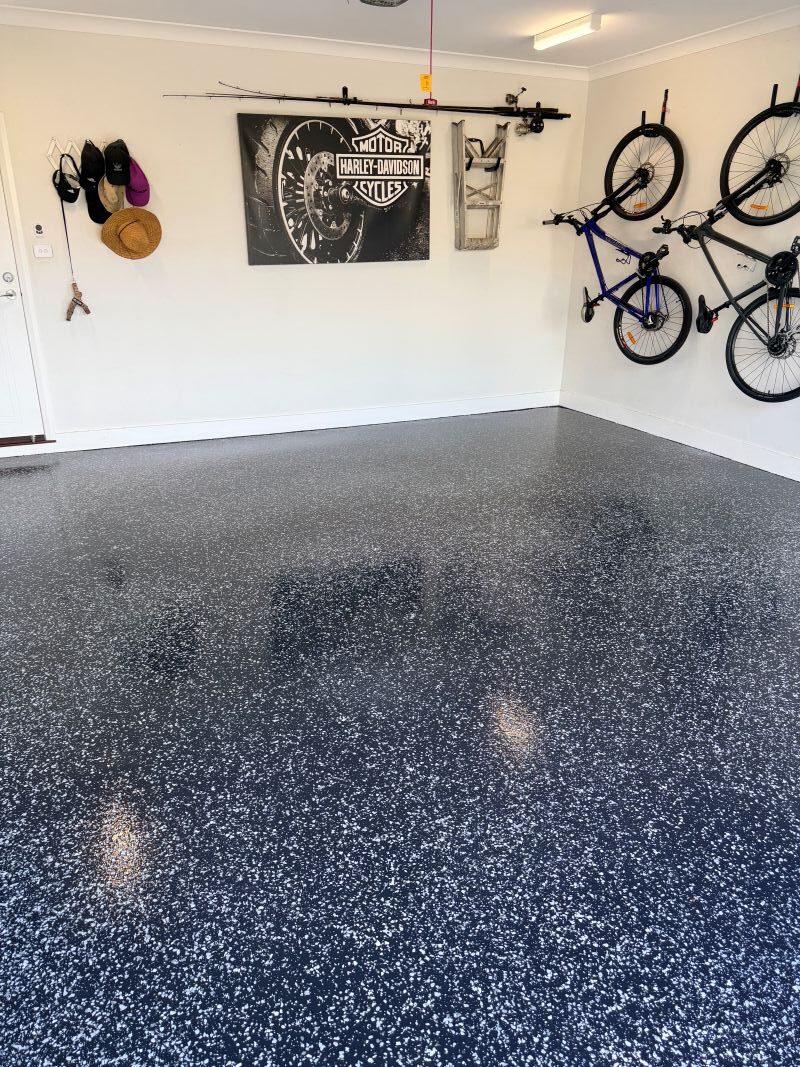
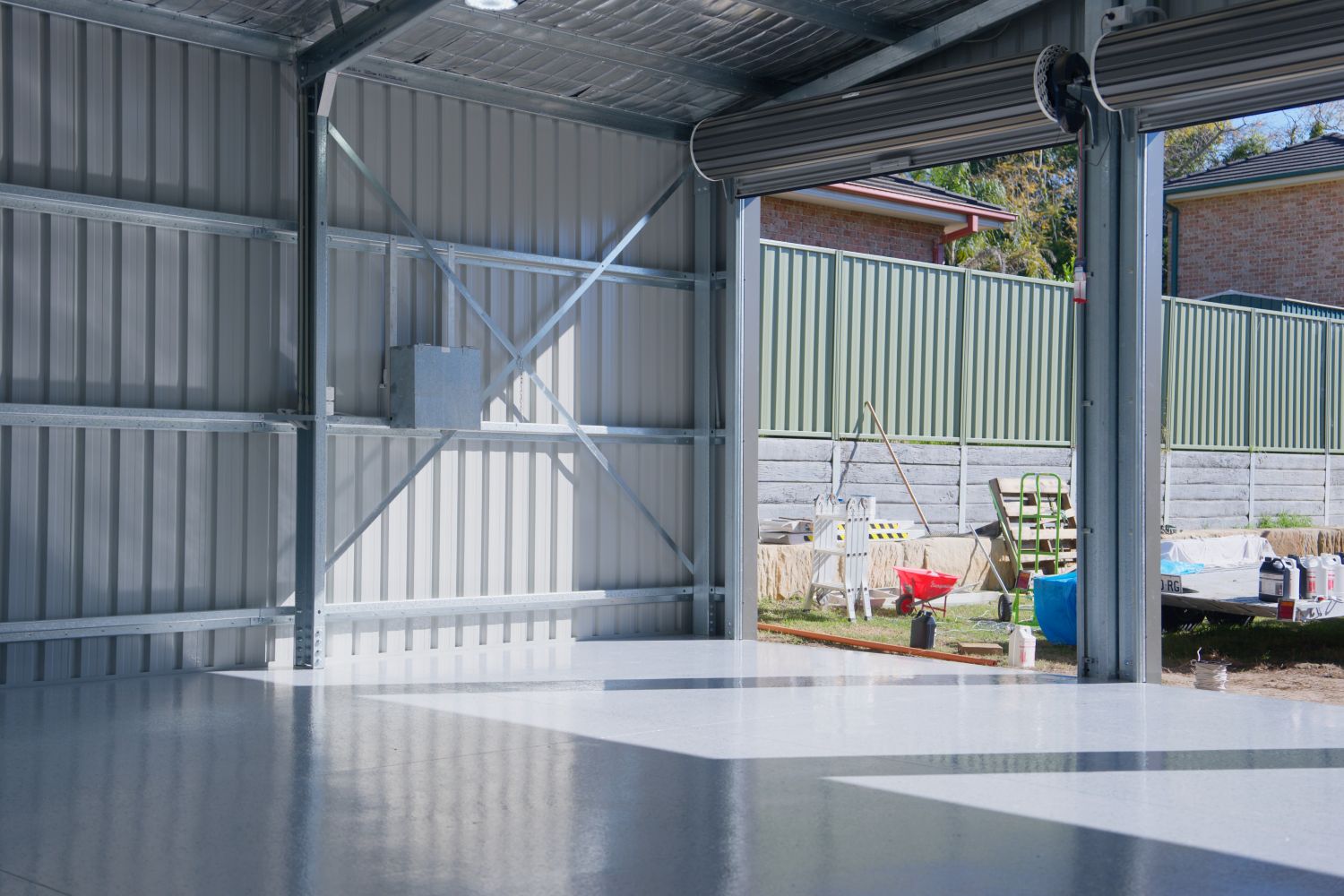
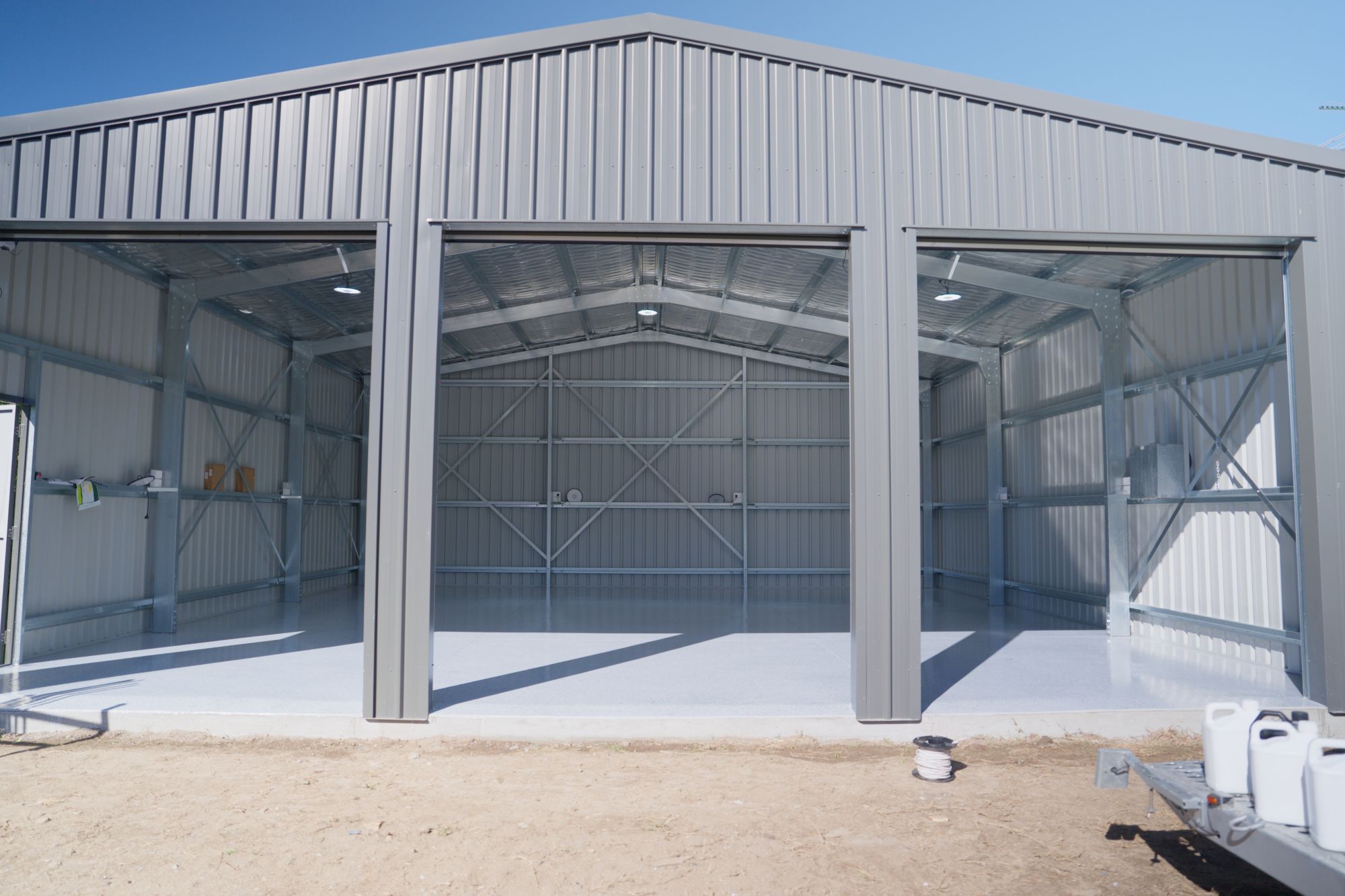
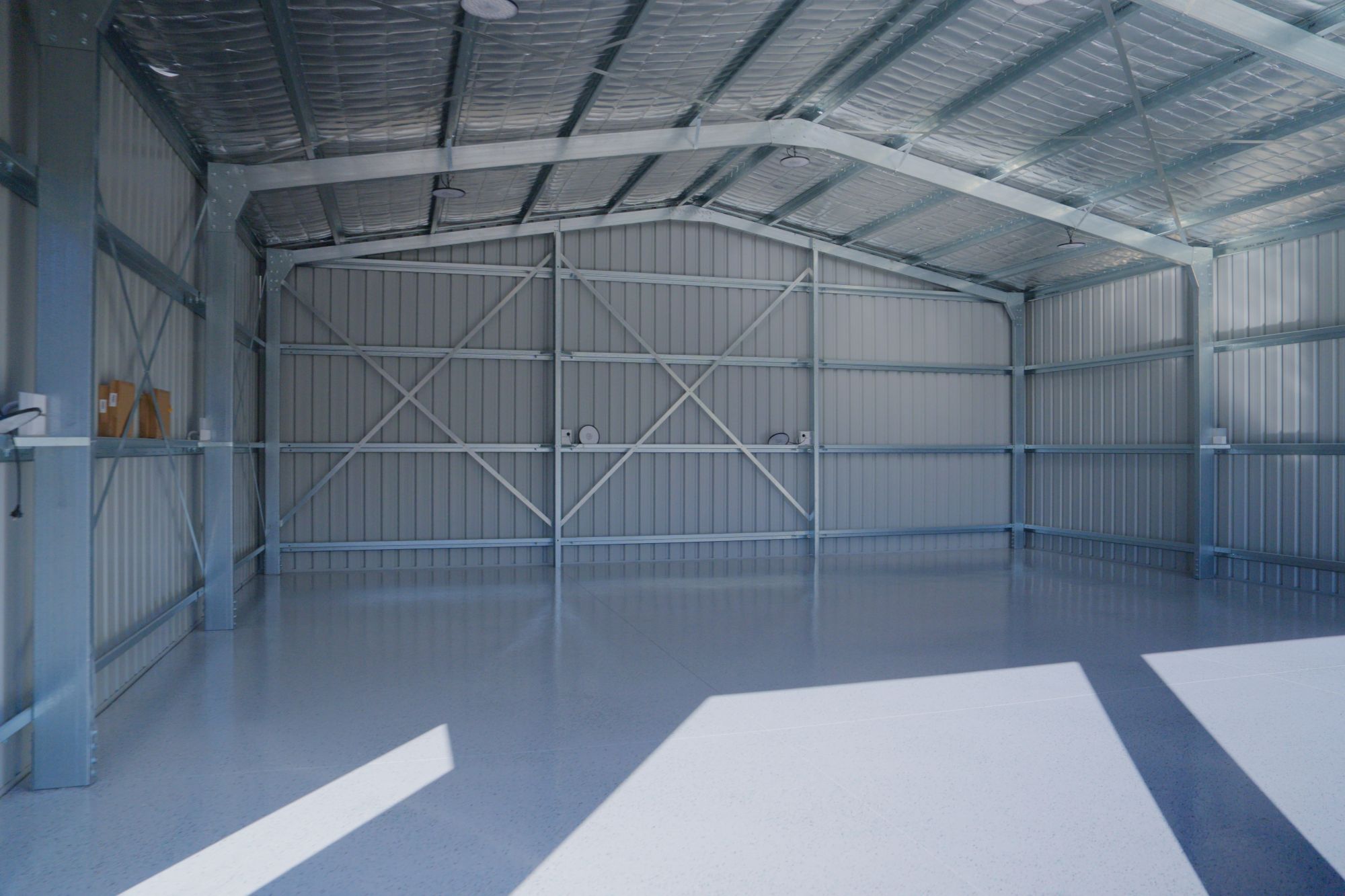
Two garage floors we have recently completed, both ground back, repaired and sealed. Drag the handle across each one to see the change.
Epoxy garage floor finishes
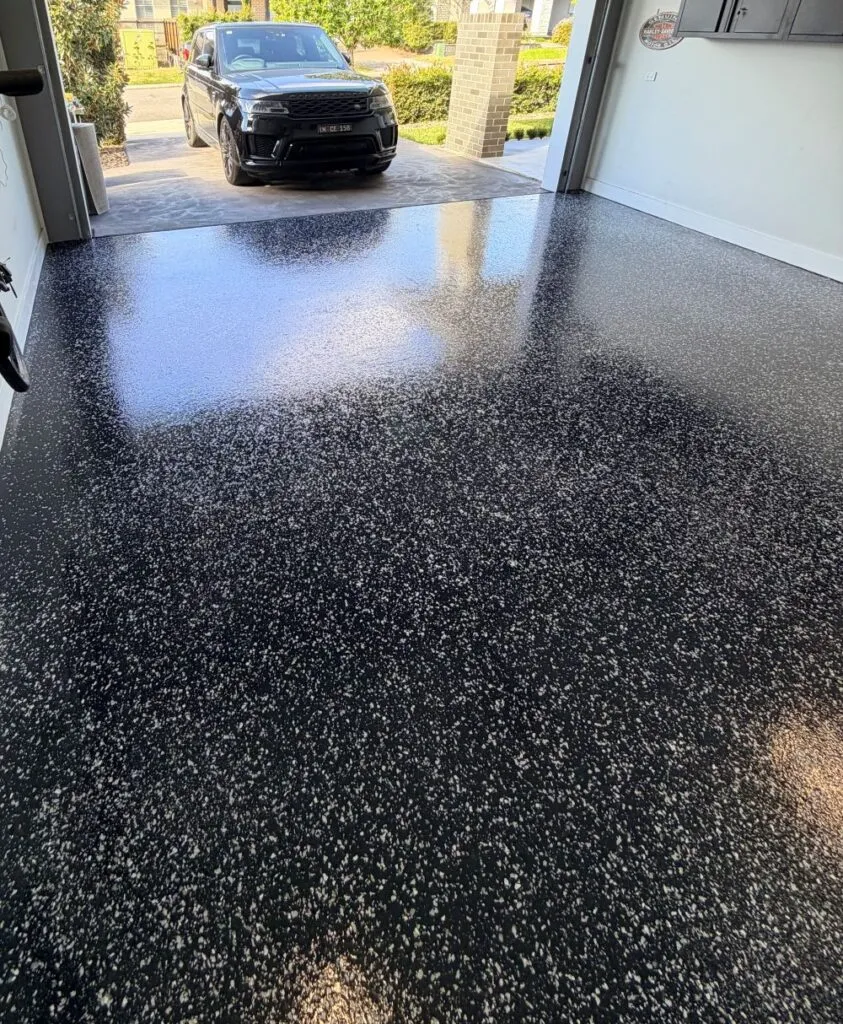
Flake
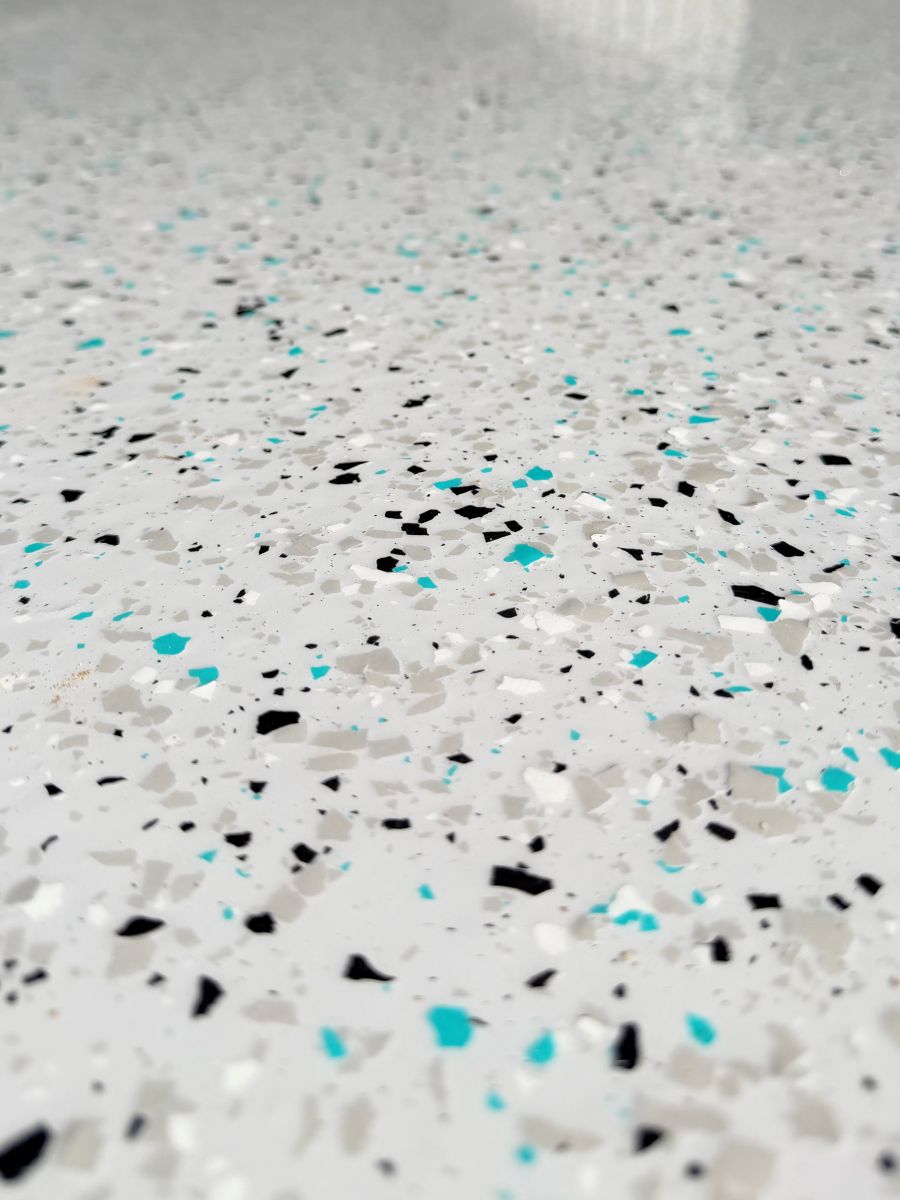
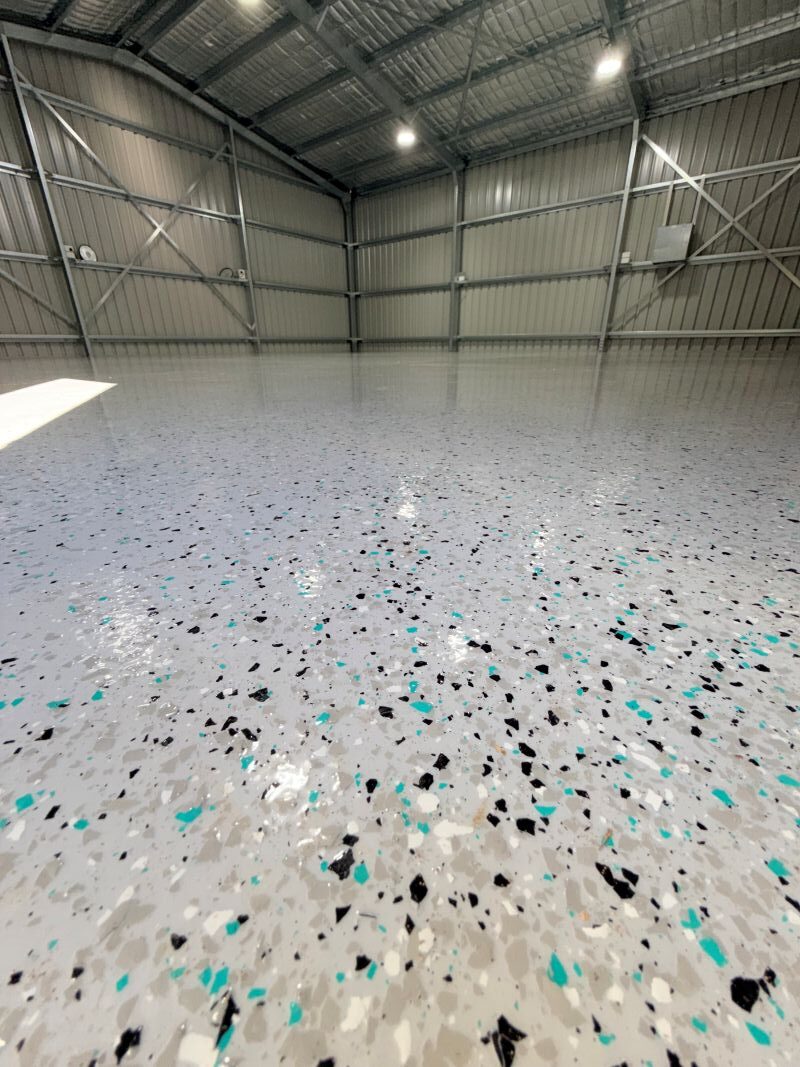
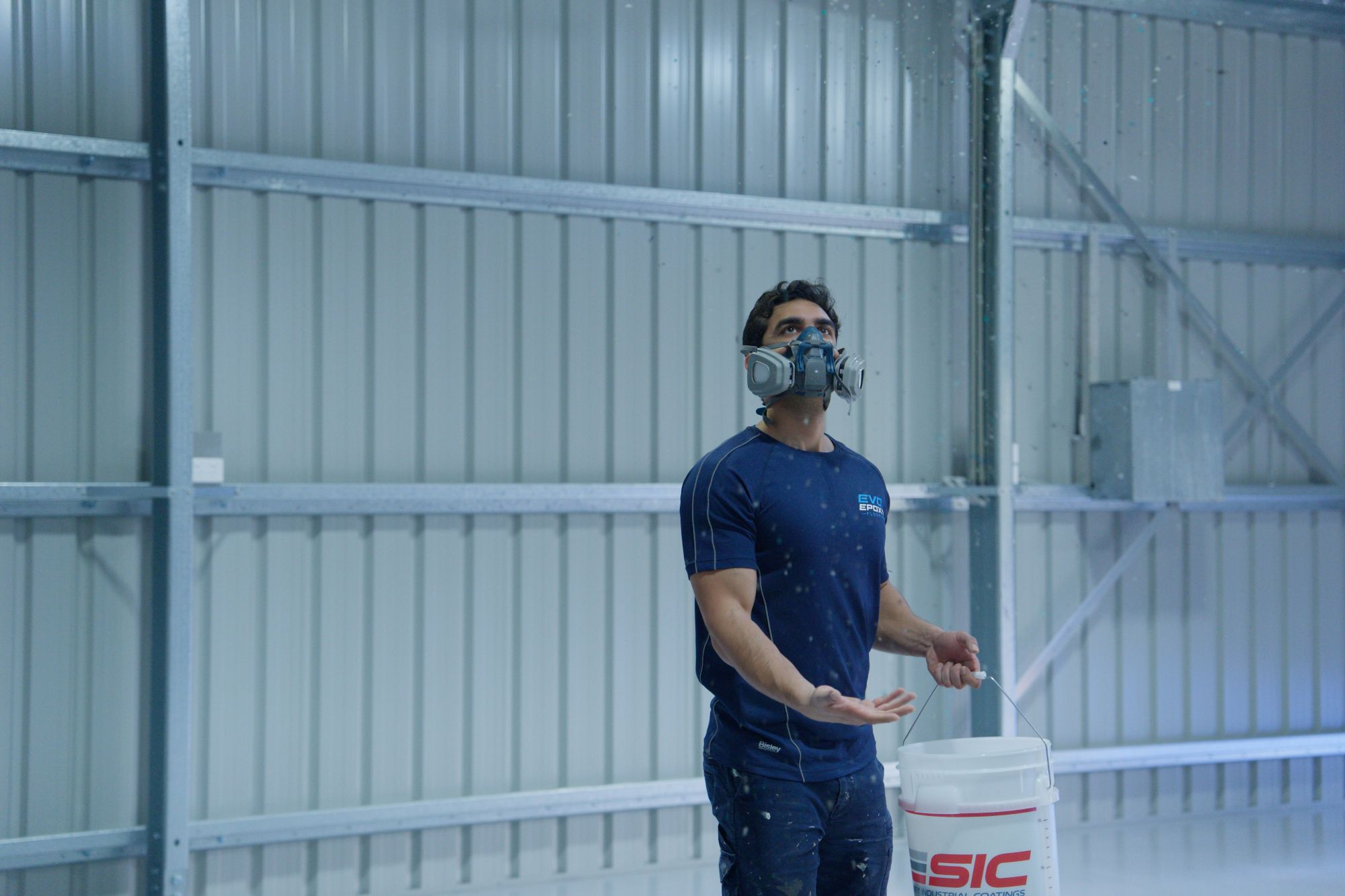
Coloured vinyl flake is broadcast across the wet body coat, then sealed under a clear top coat. Most of our garage customers end up here, because the speckled surface hides dust and small marks far better than a flat colour, and the texture gives the floor a bit of grip underfoot. Flake blends can be mixed to pick up the colours already in your house.
For a garage epoxy floor, you can go full flake, partial flake or no flake at all. More flake hides more dust and gives more grip.
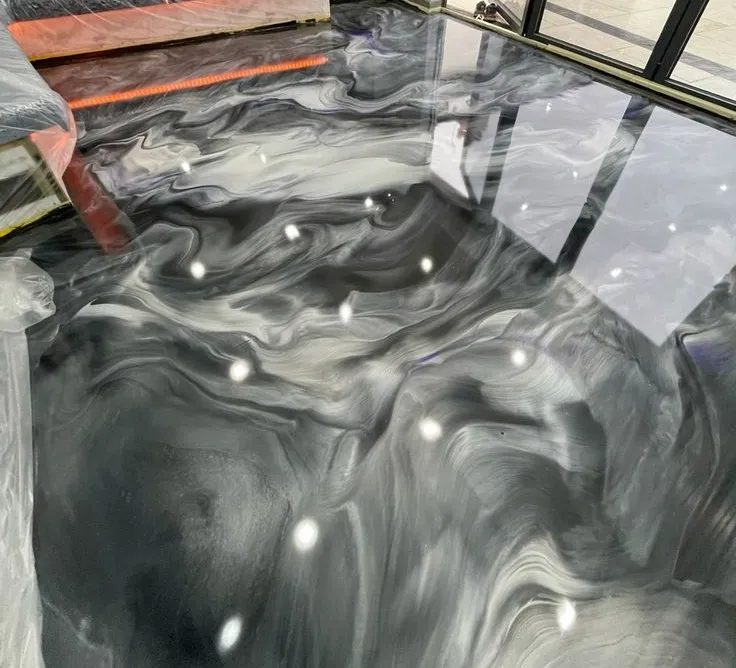
Metallic
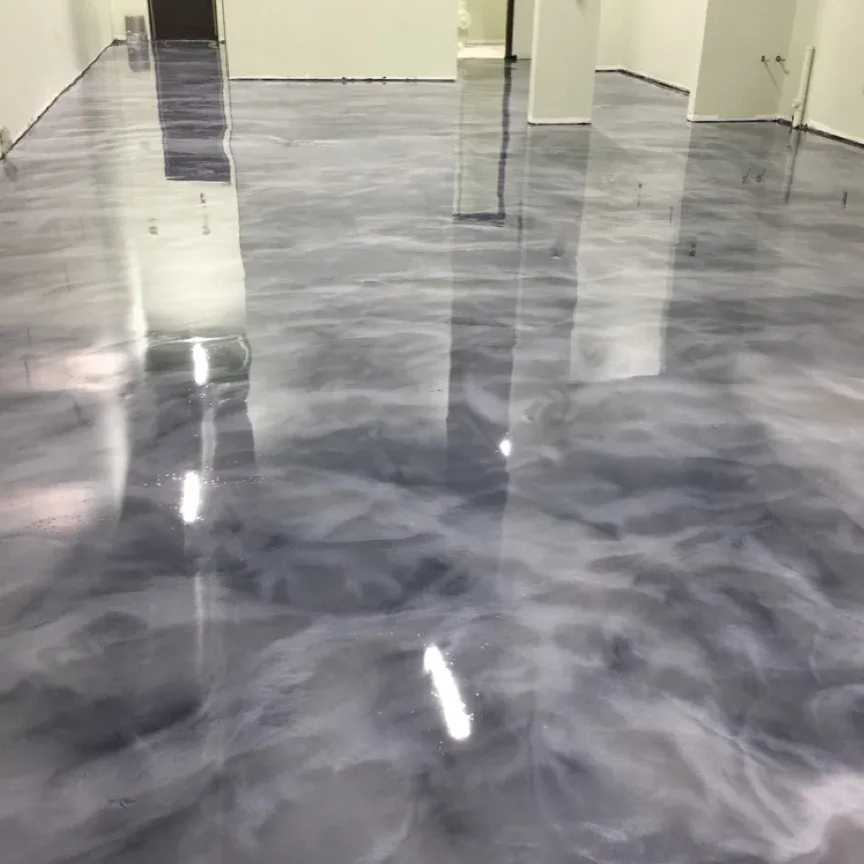
Metallic pigments are worked through the coating while it is still moving, so the finished surface has depth and swirl running through it. No two metallic floors come out the same. This suits garages that get used as more than parking, like a home gym, a workshop with the door open or a space for a car worth looking at.
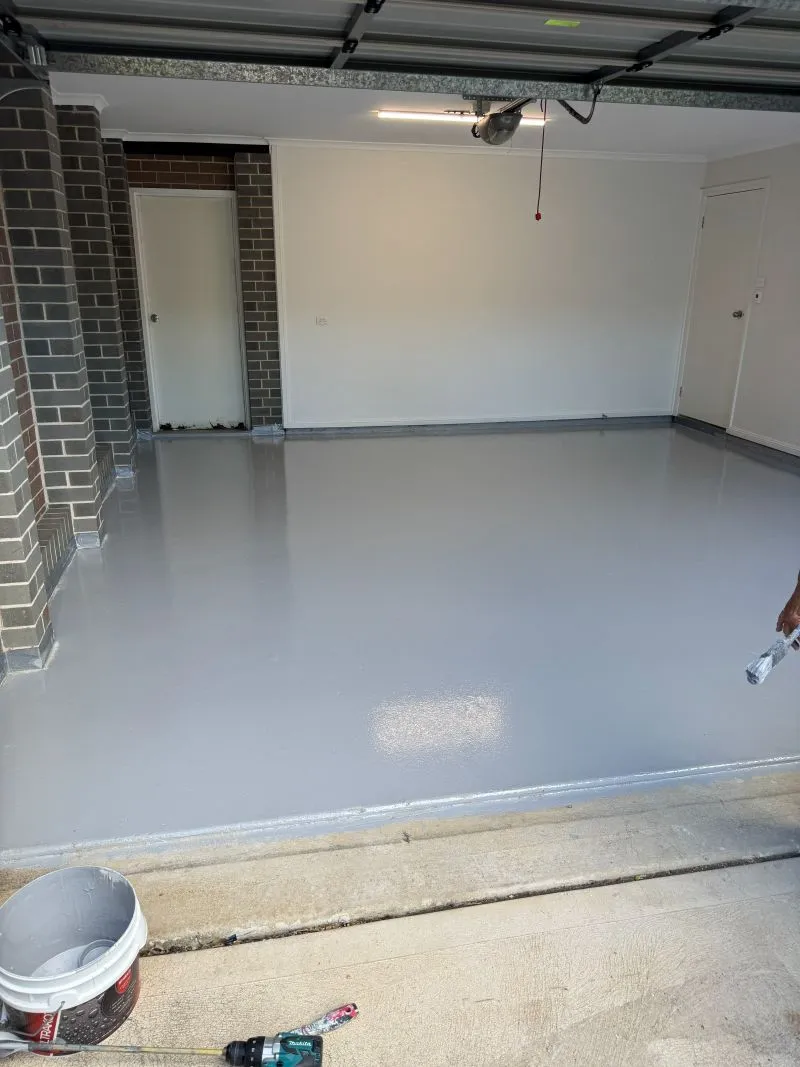
Solid colour
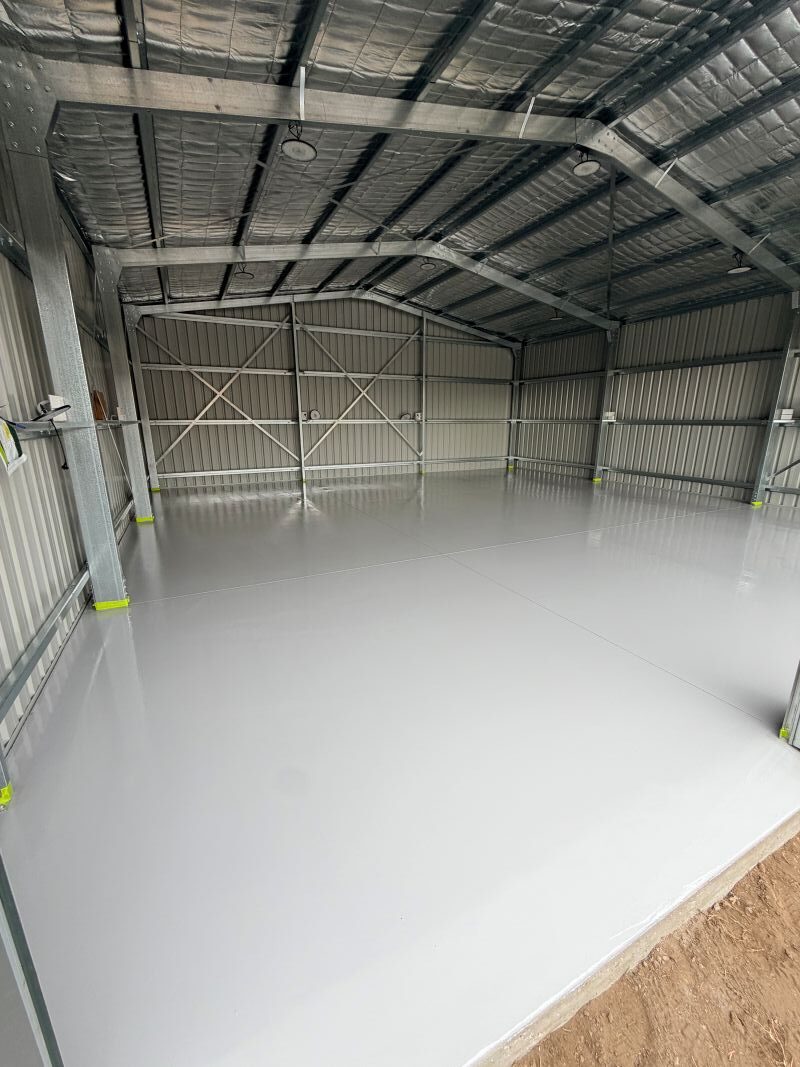
A single, even colour with a clear coat over it. The floor stays easy to sweep and the whole garage feels brighter afterwards, particularly in a light grey or a mid tone. Solid colour shows dust a little more readily than flake, so it suits people who keep the space tidy anyway.
We bring samples out and look at them in your garage, under your lighting, before you decide. A colour that looks right on a small chip can read quite differently across a whole floor.
All 76 colours are set out on our epoxy flooring colours page, including which base coat each flake blend sits on.
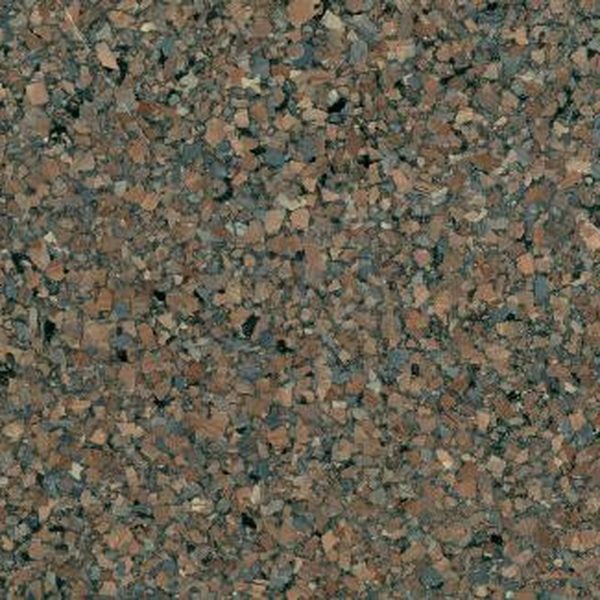
GARNET
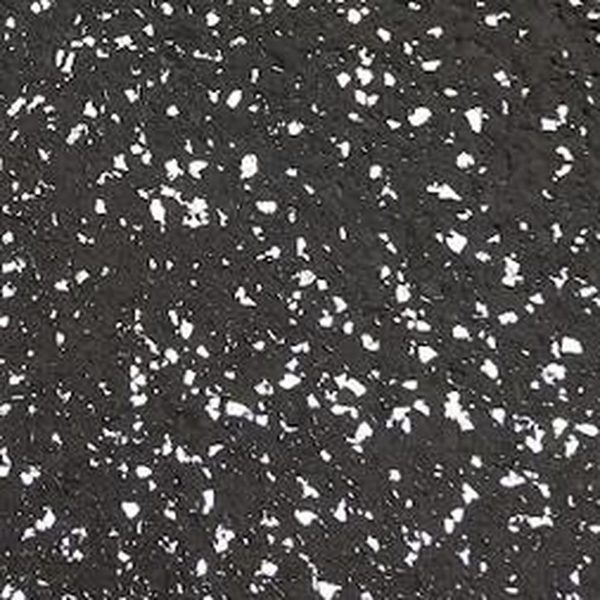
BLACK PEBBLE
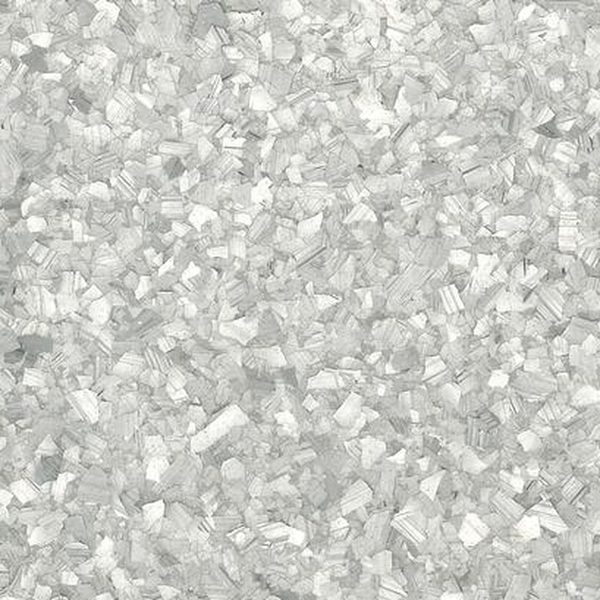
SCHIST
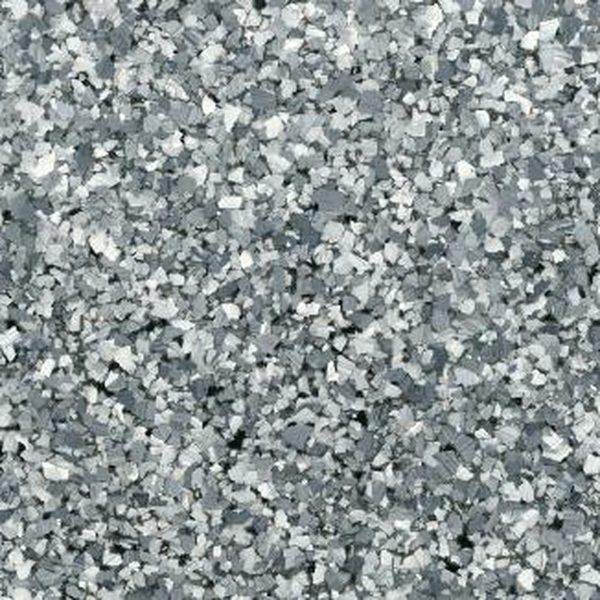
CLASSIC GREY
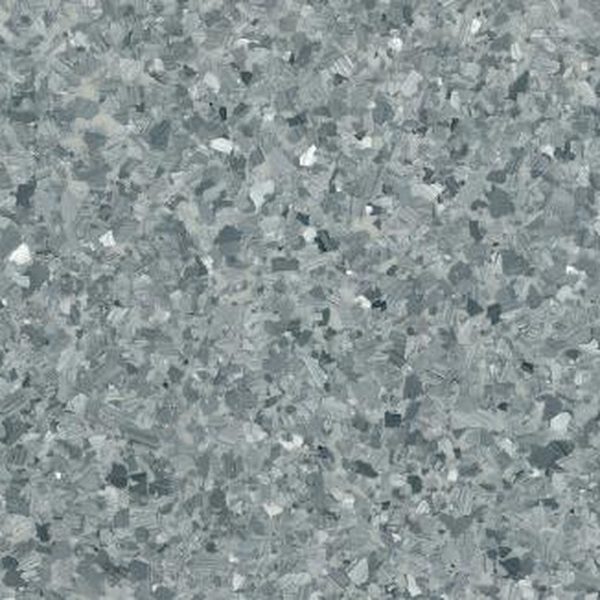
BASALT
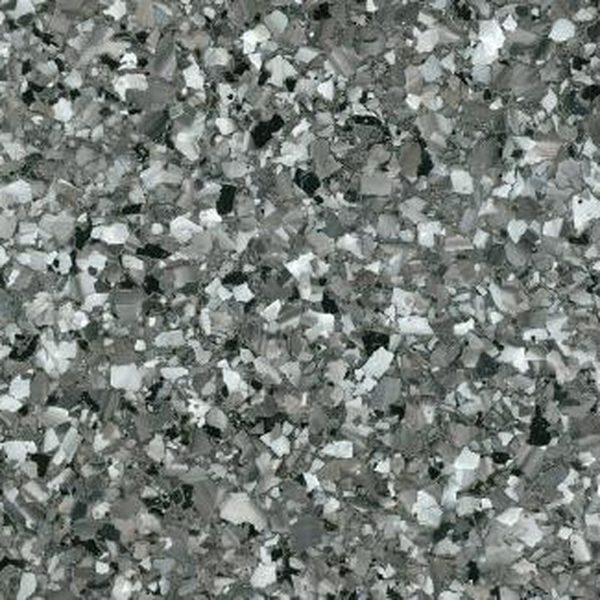
BLACK MARBLE LARGE
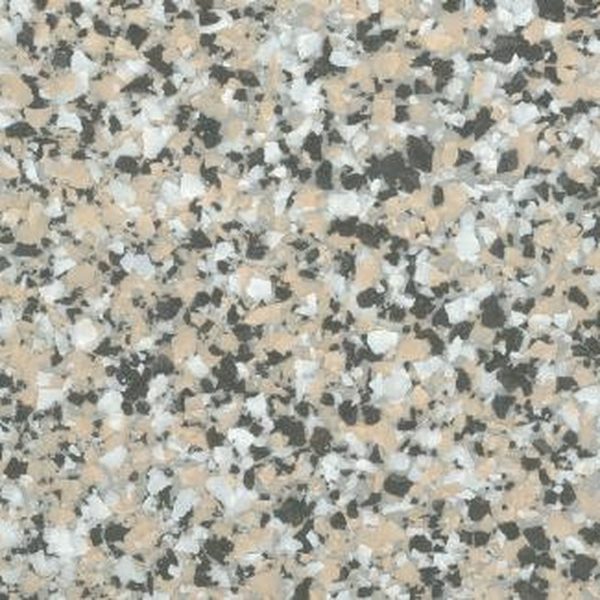
GREY WACKE LARGE
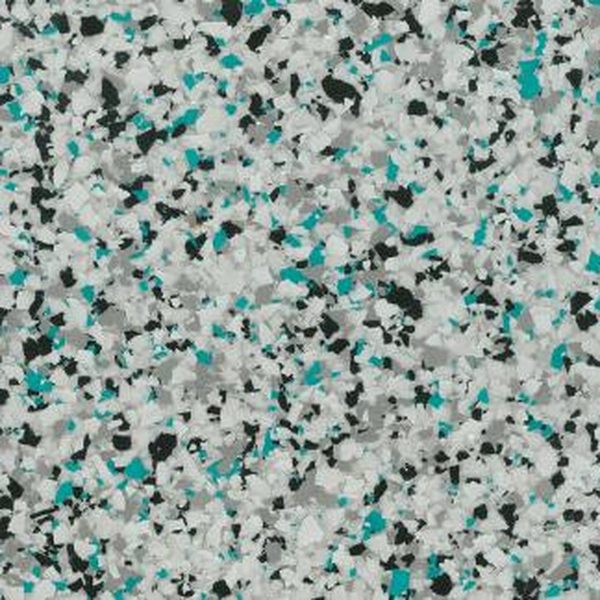
ASHEN TEAL
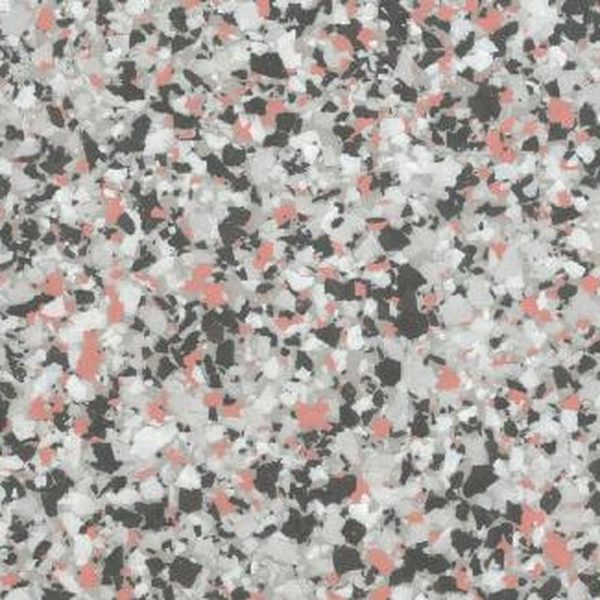
TERRACOTTA MARBLE LARGE
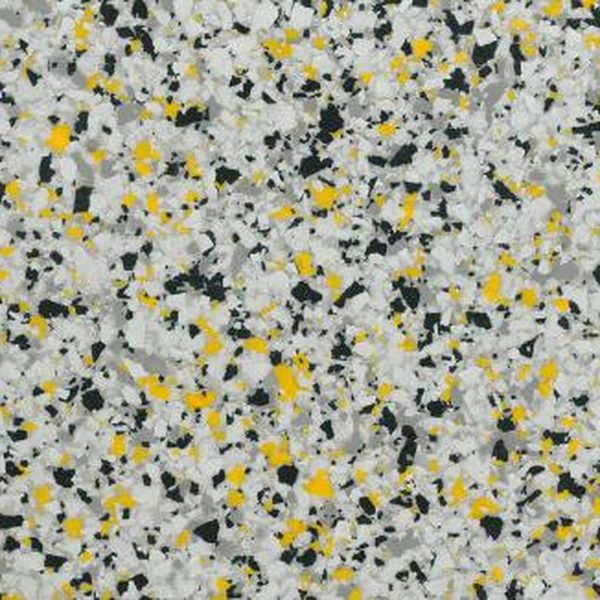
ASHEN YELLOW
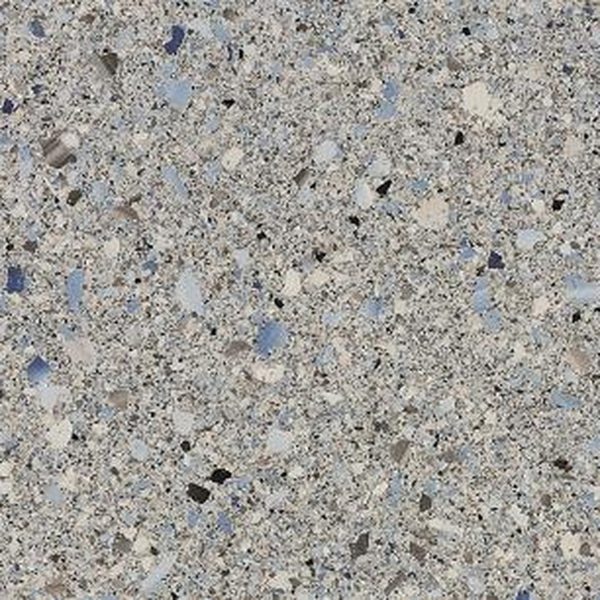
BLUE STONE
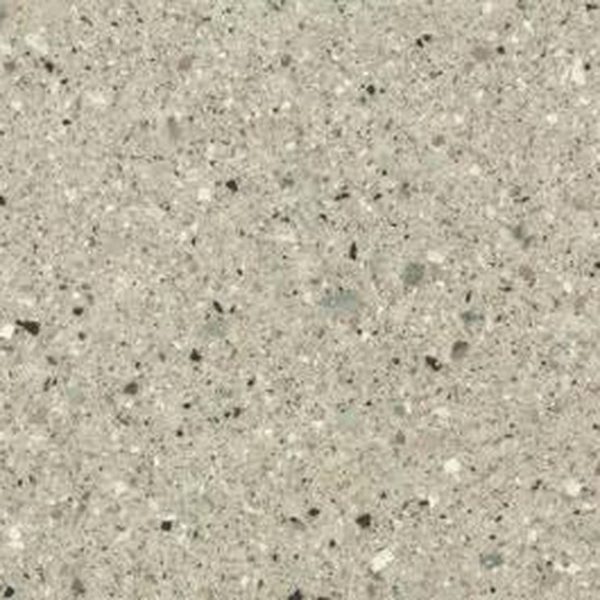
GREEN STONE
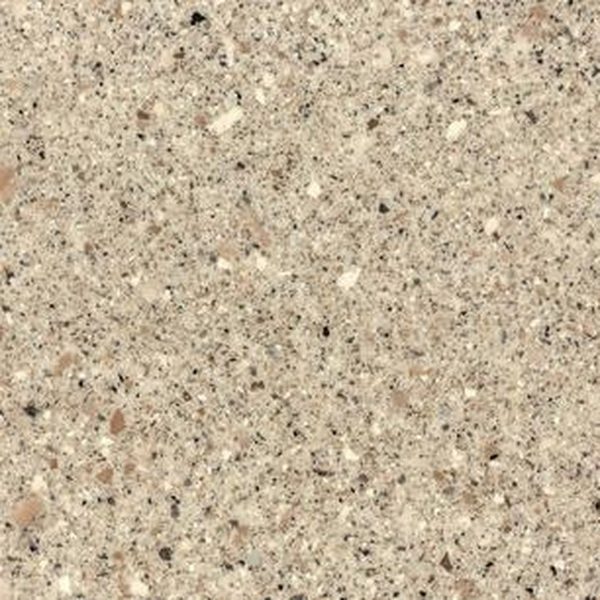
NATURAL STONE
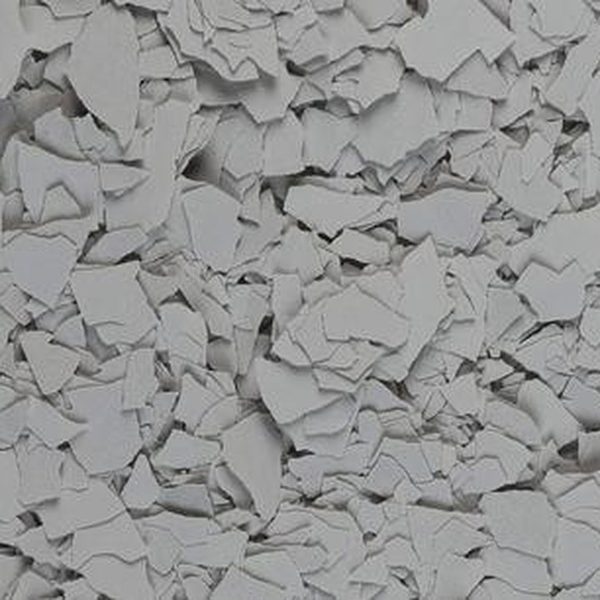
FUNCTIONAL GREY
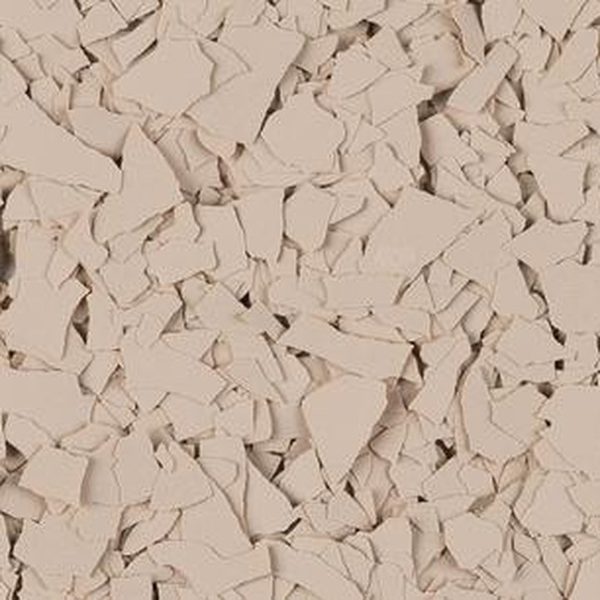
BEIGE

TEAL
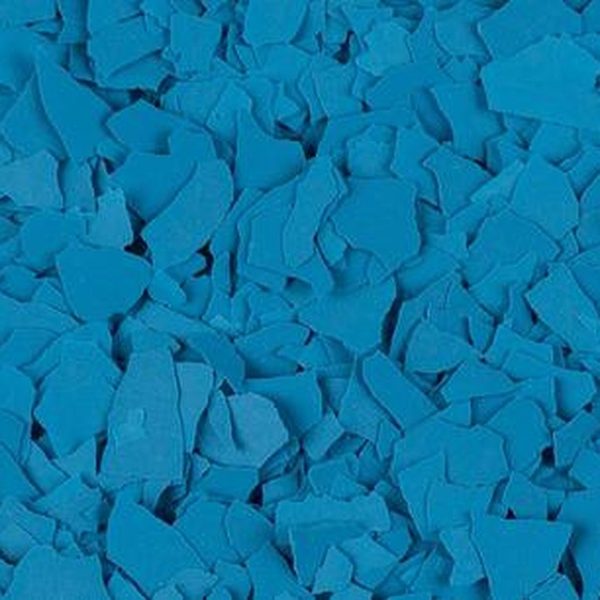
DELRAY BLUE
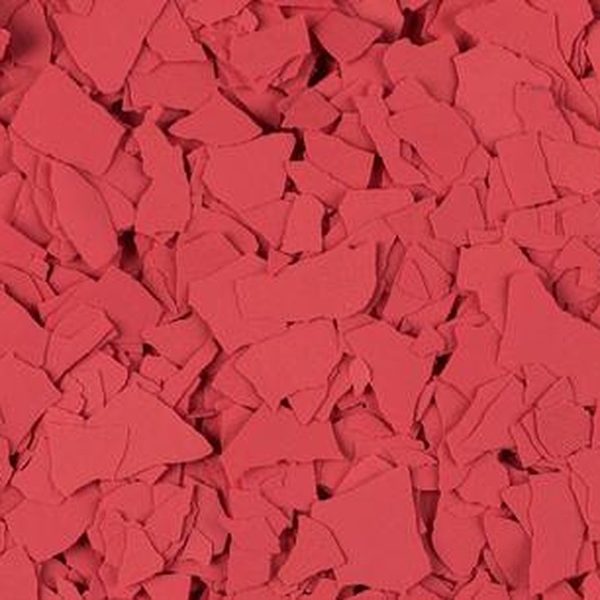
LIPSTICK RED
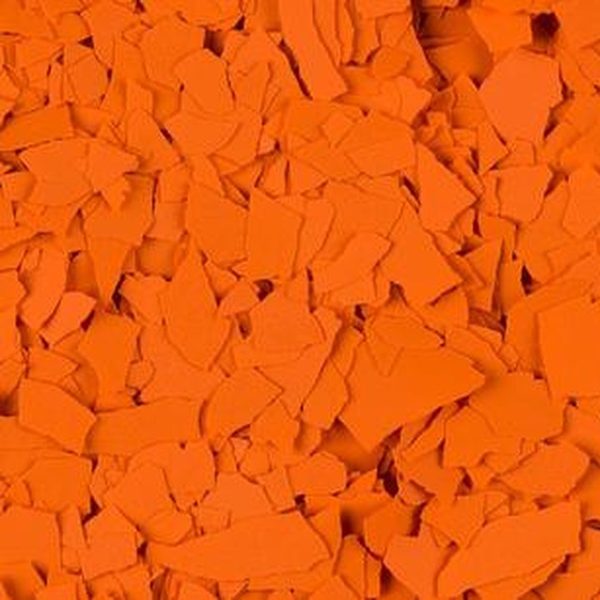
ORANGE
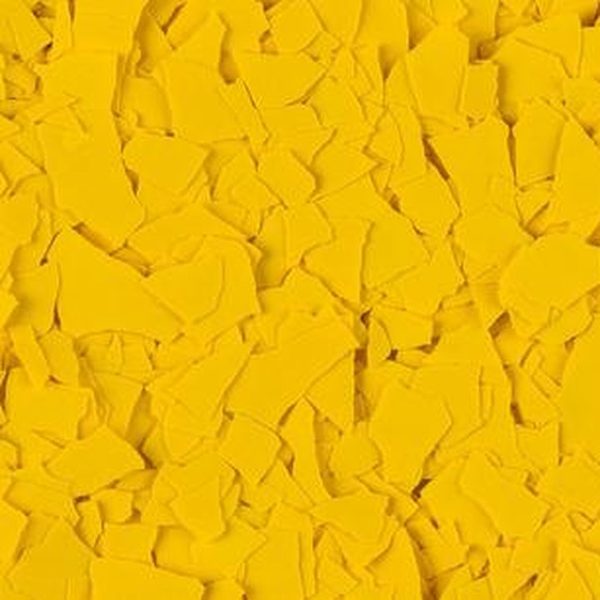
YELLOW
How an epoxy garage floor holds up to hot tyres and oil
Garage floors take a specific kind of punishment. A car sitting on a coated floor puts its whole weight through four small contact patches, and warm tyres can grip a poorly bonded coating and pull it up when the car is moved. That failure is called hot tyre pickup, and it is almost always a bonding problem rather than a problem with the coating itself, which is another reason the preparation matters so much.
Get the bond right and hot tyre pickup stops being an issue.
We choose the system based on how the garage is used. A floor that parks a work ute with tools and equipment, is different to a garage that parks a hatchback and stores the bikes.
Most home garages get our standard polyurethane top coat. For heavier use, like a work ute full of tools or a home workshop, polyaspartic is the heavier duty option, with more resistance to chemicals and knocks.
- Oil, coolant and brake fluid sit on the surface instead of soaking into the concrete below
- Dropped tools leave the slab alone, so a bad morning in the garage does not become permanent
- Cleaning takes a broom, and now and then a mop with warm water and a mild detergent.
- The fine grey dust that came off the bare slab simply stops, which most people notice first
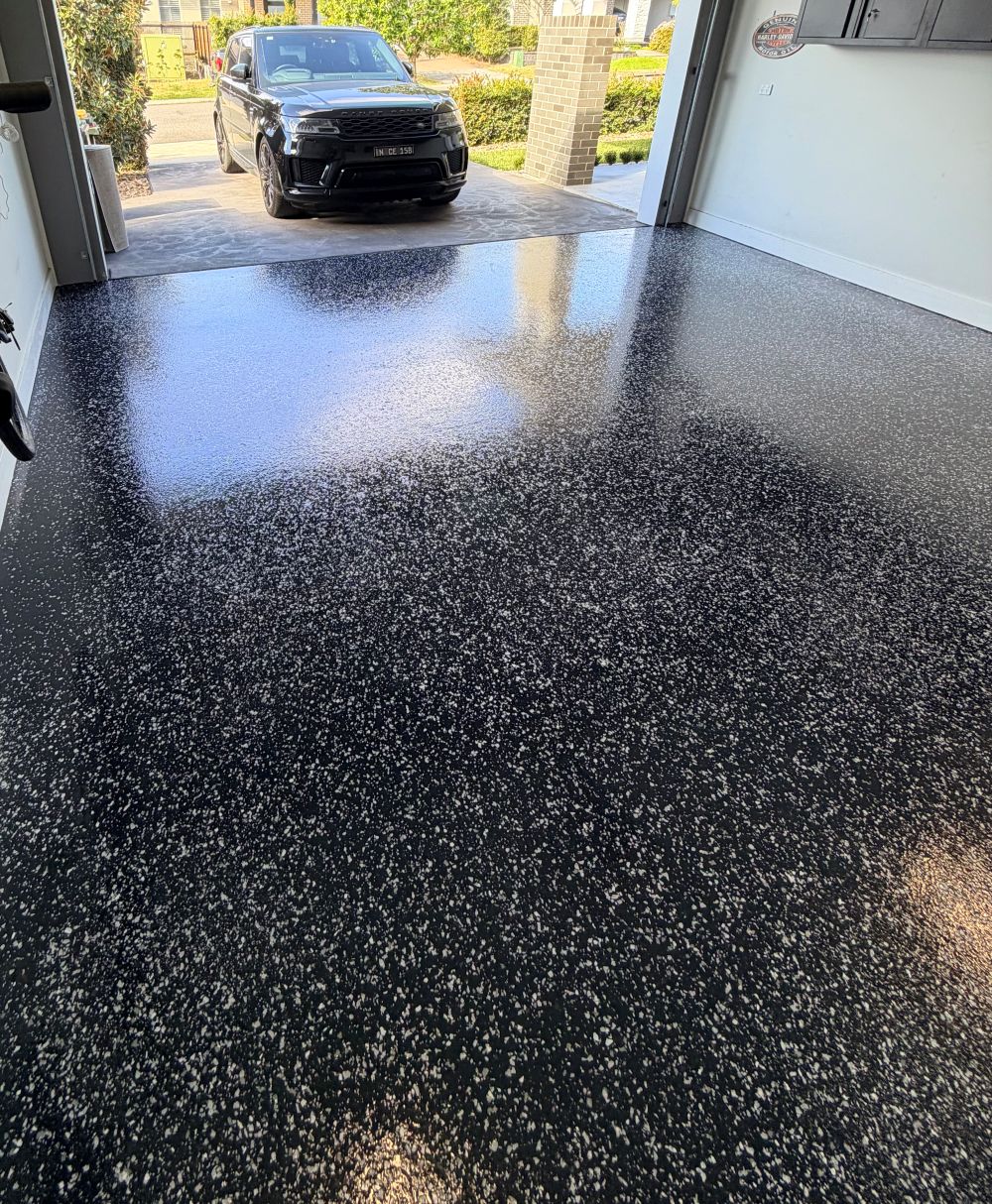
From booking to a finished epoxy garage floor
01
Quote and moisture test on your concrete
We come out, look at the slab, test for moisture and talk through how you use the space. The quote follows the visit, not photos, and covers the prep, the system, your finish and the days on site.02
Preparing the concrete garage floor
Everything comes out before we start, shelving included, and we give you notice. Then the slab is ground back with dust extraction running and any cracks or holes are repaired. This is the noisy part.03
Epoxy coating and handover
The primer goes on first, then the body coat with the flake or metallic worked into it, then the clear top coat. Each layer cures before the next goes down. You walk on it before you park on it, and we give you the dates for both.How long it takes comes down to the slab and how big it is. A new garage with sound, clean concrete moves quickly. A large older floor takes longer, and any cracks or chipped-out holes have to be filled and left to cure before anything goes over them. Most garages are 1-2 days on site, so the prep is done properly and each coat gets the time it needs.
Get a free epoxy garage floor quote anywhere in Sydney
Tell us about your floor and we will come back fast with an upfront price. Servicing garages, warehouses and homes across Sydney. Starting prices for every floor type are set out on our epoxy flooring cost page.
0468 333 881sales@evoepoxy.com.auFree on-site quote, fixed written price
Flake, metallic or solid colour finish
76 colours to choose from
UV-stable polyurethane sealer
7-year written product warranty
Perfect for
Family garagesShow garages & man cavesHome gymsWorkshops
We work out of Kellyville and cover Castle Hill, Kellyville Ridge, Bella Vista, Norwest, Baulkham Hills, Rouse Hill, Beaumont Hills, Glenhaven, Dural, Kenthurst, Box Hill, Stanhope Gardens, Glenwood, Parklea, The Ponds, Schofields, Winston Hills, Seven Hills, Northmead and Marsden Park.
We reply to every enquiry within one business day
Epoxy garage floor questions
How long before I can park on my new garage floor?
Foot traffic is usually fine well before vehicle traffic, because the coating keeps hardening long after it feels dry. Evo’s working figure is 72 hours before a garage floor goes back into normal use, with the polyurethane sealer we use on home floors. Weather, temperature and the state of the slab move that, so we give you the real dates for your floor. It is worth waiting them out rather than putting a car back in early, since final hardness is what protects a garage floor from hot tyres.
Will an epoxy floor be slippery?
A clear top coat on its own has a smooth, glossy surface, which can feel slick when it is wet. Flake finishes have texture built into them from the flake itself, and we can also add a fine slip resistant additive to the top coat if the garage is somewhere people walk in wet shoes. Tell us at the quote and we will factor it in.
Can you coat over an existing painted or sealed garage floor?
The old coating comes off first, because whatever is already on the slab becomes the weakest point in the new floor. Stripping it back is part of the preparation and it is included in what we quote. It sometimes adds time if the previous product is stubborn, and we will flag that when we look at the slab.
Is a garage floor coating worth it if the concrete is stained and cracked?
Usually yes, and stained cracked concrete is what most of our garage jobs start as. Stains get ground out, cracks and chips get cut and filled during preparation, and the new coating covers the repairs. If a slab has structural movement rather than ordinary surface cracking, that is a different conversation and we will tell you honestly when we come out.
What are the downsides of an epoxy garage floor?
There are a few, and it is better to know them before you book. The slab has to be ground back first, so the garage gets emptied and the prep is noisy. A slab with damp coming up through it needs a moisture barrier before any epoxy goes down, which is why we test first. A plain gloss top coat can feel slick when it is wet, and we can add a slip resistant additive to the top coat if people walk in wet. A solid colour shows dust more than flake does. And the floor needs about 72 hours before the car goes back in.
How long does an epoxy garage floor last?
Years, when the bond is right. Our epoxy floors come with a 7-year written product warranty.
Polyurethane or polyaspartic: which top coat suits an epoxy garage floor?
For most home garages, polyurethane. It is our standard top coat on home floors because it stops discolouring, protects from UV and adds a layer of hardness. Polyaspartic is the heavier duty option, with more resistance to chemicals and impact, so it suits commercial floors and garages that see more traffic. We will tell you which one your floor needs when we come out.
How much does an epoxy garage floor cost?
A single garage starts from $1,800, a double from $2,500 and a metallic double garage from $3,800. What moves the price is moisture in the slab, how many cracks need filling and any old paint that has to be ground off.
Do you do epoxy garage floors outside the Hills District?
Yes. We are based in Kellyville and we quote epoxy garage floor coatings right across Sydney.
Evo Epoxy Flooring2 Affleck Cct, Kellyville NSW 2155Servicing the Hills District & North West Sydney0468 333 881Get directions
Ready to talk garage epoxy flooring?
Free on-site assessment and a fixed written quote within one business day.