
Epoxy does not stick to concrete. It sticks into concrete. That distinction is the whole reason grinding exists, and it is why a floor that was rolled onto a smooth, sealed or dusty slab will lift no matter how good the product was.
Evo Epoxy Flooring is based in Kellyville, and concrete grinding and floor preparation is one of the services Evo Epoxy offers. Here is what the grinder is actually doing, what happens when it gets skipped, and how to tell from the quote whether the job you have been offered includes it.
Key takeaways
- Grinding opens the concrete so the coating can key into it mechanically.
- A smooth or sealed slab gives epoxy nothing to hold, which is how delamination starts.
- Acid etching and a quick sand are not equivalent substitutes.
- If a quote does not mention preparation, that is the line item someone has removed to win the job.
What is concrete grinding, and why does epoxy need it?
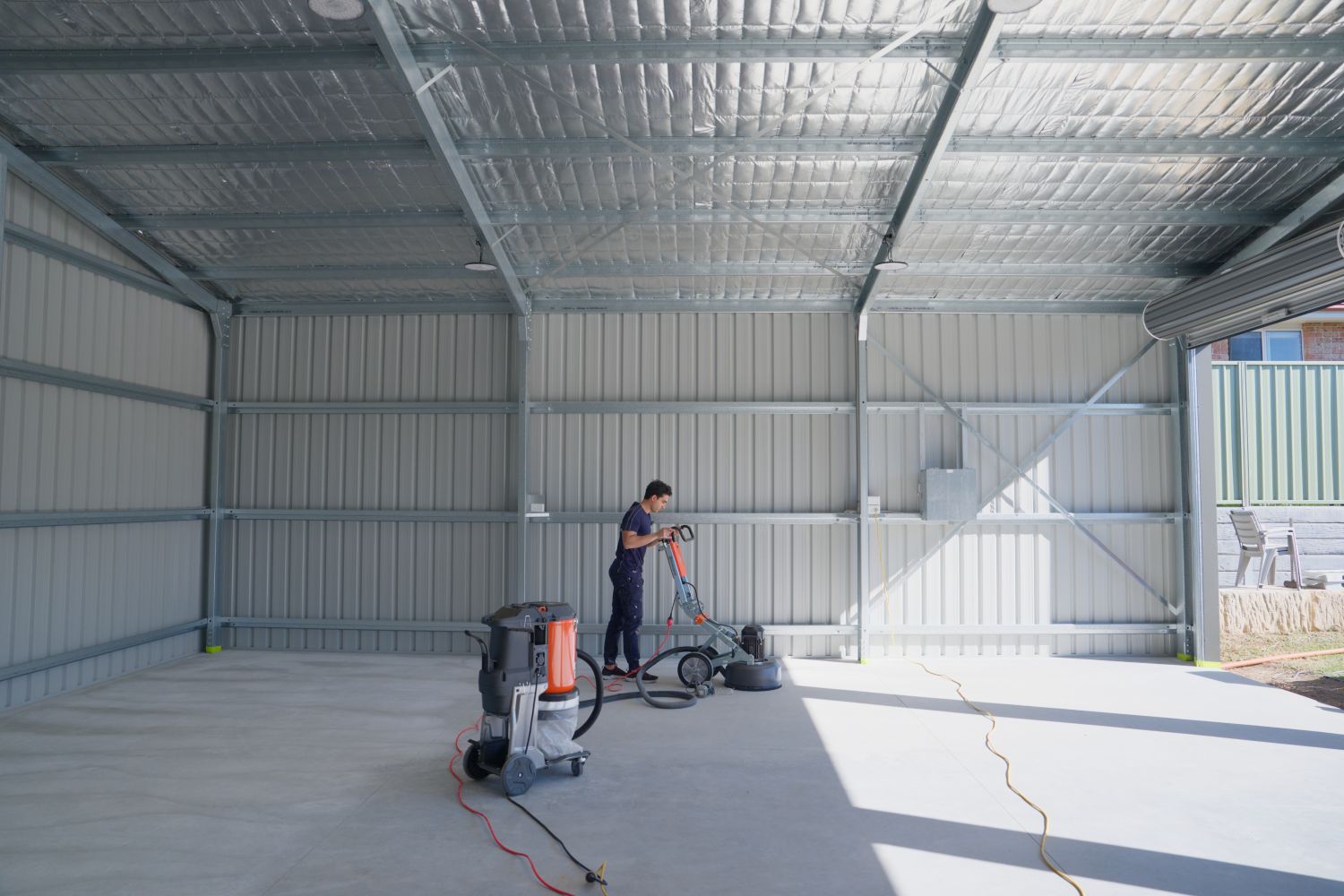
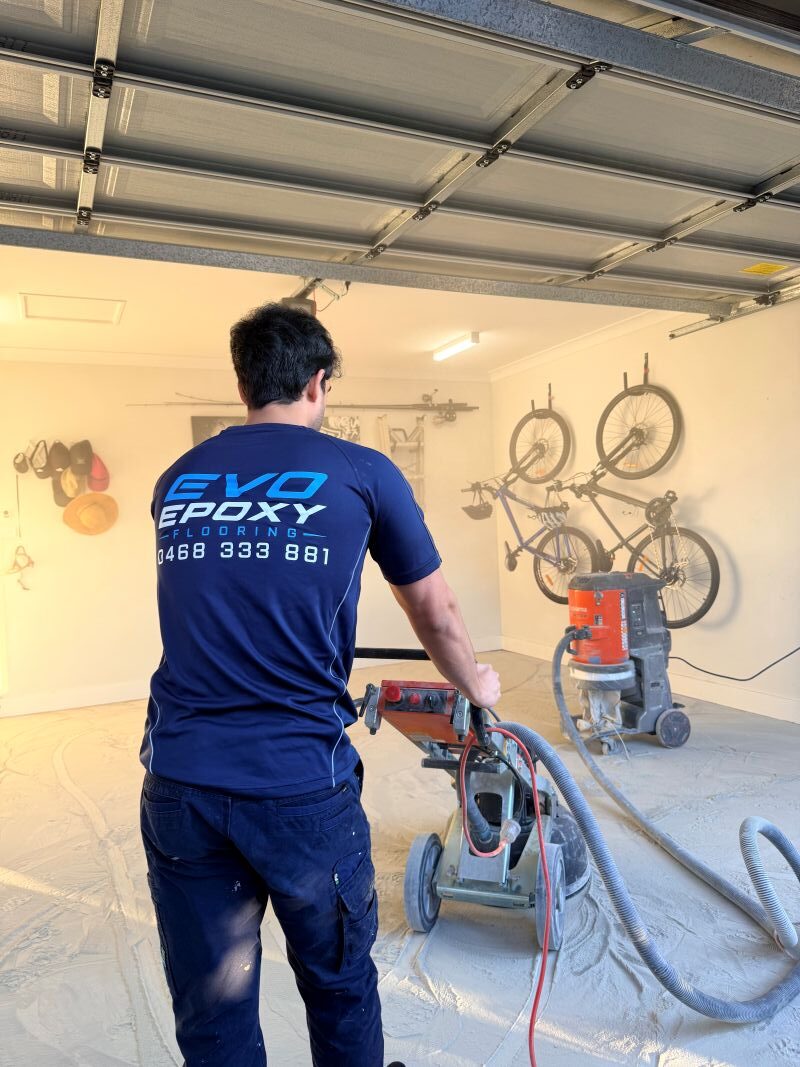
Grinding uses diamond tooling on a weighted machine to cut the top layer off the slab. It takes off the laitance, which is the weak, fine layer of cement paste that rises to the surface as concrete cures, and it leaves behind an open, slightly textured profile.
That profile is the bond. Epoxy is a liquid when it goes down, so it flows into the open pores and the fine scratch pattern the tooling leaves, then cures hard inside them. What you end up with is a mechanical key, not a glued on film.
If the grinding is skipped, the coating is being asked to hold onto a closed, polished surface with nothing to grip. It can look perfect for months. It fails later, usually at an edge or under a tyre, and once it starts lifting it keeps going.
What else does grinding fix before the coating goes down?
Preparation is not only about profile. Grinding the slab is also how we find out what is really there.
Old garage floors are rarely bare concrete. There is often a curing compound from the day it was poured, a previous sealer, paint, tile adhesive, glue from carpet tiles, or oil that has soaked in over twenty years. Every one of those will stop epoxy bonding. Grinding removes the surface contaminants and reveals the ones that have gone deeper.
It also levels the slab. Trowel marks, high spots and the ridge where a slab was poured in two pours will telegraph straight through a coating, and once the floor is glossy every one of them catches the light. Taking the tops off those before coating is far easier than trying to hide them afterwards.
Oil in the slab is the one to watch
Oil in a garage floor migrates. You can grind a stain away visually and still have contamination sitting below the surface that comes back up into the coating. That is why a good preparation stage includes checking the slab after grinding, not just before.
Is acid etching a substitute for grinding?
No. Acid etching uses a diluted acid to bite into the surface chemically, and it was common before grinders became widely available. It produces a much shallower profile than diamond grinding, it does not remove sealers, paint or oil, and it leaves salts behind that have to be neutralised and rinsed properly or they interfere with the coating.
The other problem is consistency. An acid wash bites harder wherever the slab is more porous, so you finish with an uneven profile across the floor. Diamond grinding gives you the same profile everywhere, which is what a coating needs.
Sanding with an orbital sander has the same shortcoming for the opposite reason. It polishes more than it opens.
How do you tell if a floor was prepared properly?
Before the coating goes down, a ground slab looks dull, uniform and slightly rough, and it feels like fine sandpaper. It should not be shiny anywhere. Patches of gloss are patches where the grinder did not cut, and those are the spots that fail first.
You should also see and hear the preparation happening. Grinding a garage generates a lot of dust, so a proper setup runs a vacuum on the machine. If someone turns up to coat your floor with nothing but rollers and buckets, the preparation stage is not going to happen.
After the floor is finished, the tell tale signs of poor preparation take months to appear. Look for lifting at the edges and around the door, bubbles or blisters in the surface, and sections that peel away cleanly in sheets rather than tearing. A coating that separates cleanly and leaves smooth concrete underneath never keyed in to begin with.
Does every floor need the same amount of grinding?
No, and this is where experience matters. The amount of preparation depends on what the slab is, what has been on it, and what is going on top.
A newly poured residential garage with nothing on it needs the laitance cut and a consistent profile opened. An old workshop slab with two previous coatings and thirty years of oil is a much bigger preparation job than it is a coating job. A flake floor and a metallic floor also make different demands on the surface underneath, because a high gloss finish shows everything the slab is doing.
Driveways are different again, because they are exposed and they move. We treat driveway coating and sealing as its own preparation problem rather than a garage job done outdoors.
What should the quote say?
It should say what preparation is included, in words. Diamond grinding, the removal of existing coatings if there are any, crack and joint repair if the slab needs it, and how the dust is controlled.
A quote that lists only the coating system and a price per square metre has left the most labour intensive part of the job unstated. That is usually deliberate. Preparation is the slowest, dirtiest and most expensive stage, so it is the first thing removed when someone is competing on price alone.
If you want to know what preparation your floor needs, we will come and look at it. Call 0468 333 881 or see the garage epoxy flooring page for what a finished job involves.
Frequently Asked Questions
Can epoxy be applied over an existing coating?
Sometimes, but only after the existing coating has been ground back and the bond of whatever remains has been tested. Coating straight over a layer that is already letting go means the new floor is only ever as good as the old one underneath it, and it will lift in the same places the old one was going to.
How much dust does grinding make?
A lot, which is why the grinder runs with a vacuum attached at the head. Done properly, the dust is captured at the machine rather than settling through the rest of the house or the workshop. If someone is grinding a floor with no extraction running, the dust will find its way into everything nearby.
Does a brand new slab still need grinding?
Yes. New concrete carries laitance, the weak layer of fine cement paste that rises as the slab cures, and it may also carry a curing compound sprayed on shortly after the pour. Both have to come off before a coating will bond, so a brand new slab still needs a proper grind rather than a quick clean.
How long does preparation take?
It depends entirely on the slab’s condition and size. A clean residential garage is quick. A slab with old coatings, adhesive or oil contamination takes considerably longer, and that is the honest reason two quotes on the same floor can be so far apart.
What does a failed bond look like?
Peeling in sheets, blisters, or sections lifting at the edges where a wheel or a door catches them. If the piece that comes away is smooth on its underside and the concrete beneath it is smooth too, the coating never keyed into the slab.